
Medically reviewed by [Surgical Oncologist - name to be confirmed by editor]. Last reviewed: 20 June 2026.
Not everyone with breast cancer is a robotic surgery candidate - and being honest about that from the start is better than overselling the technique. But many women are candidates. Finding out whether you qualify is one of the most important things you can do at the start of your decision-making.
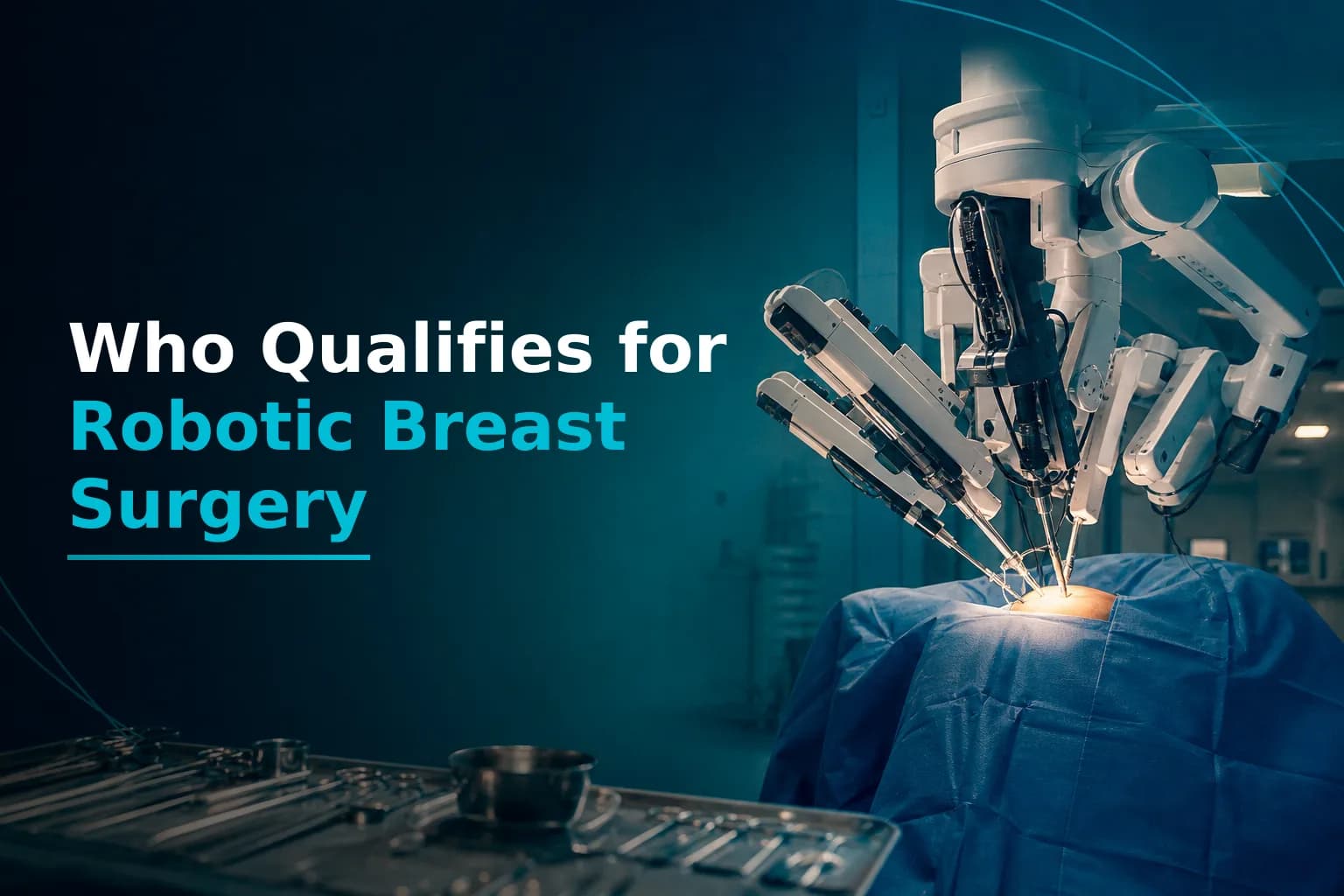
Robotic breast cancer surgery uses a robotic platform - most often the da Vinci system - to perform precise procedures through one or more very small incisions, typically hidden in the armpit or along natural skin folds. The surgeon sits at a console and controls robotic instruments while viewing a magnified 3D image of the operating area. For the right patients, this approach may mean smaller scars and a faster recovery than traditional open surgery.
Whether you qualify depends on several factors: tumor size, cancer stage, where the tumor sits relative to your nipple and skin, your breast size, your general health, and the specific procedure being considered. This guide explains each factor so you can ask the right questions at your next visit.
At a Glance: Who May Be a Candidate for Robotic Breast Cancer Surgery?
You may qualify if you have an early-stage tumor (stage I to IIIA), the main tumor is less than 5 cm, there is no skin or chest wall involvement, and lymph node disease is limited or absent. A specialist surgeon will make the final decision based on your individual scans and medical history.
What Type of Robotic Breast Surgery Might Apply to You?
The type of robotic procedure matters because each has different requirements. The main options used in practice are:
- Robotic nipple-sparing mastectomy - the surgeon removes all breast tissue through a hidden incision while keeping the nipple and surrounding skin. Used for early-stage cancer where the nipple is not involved, and for surgery to prevent future cancer in women with a high genetic risk.
- Robotic skin-sparing mastectomy - similar, but the nipple is not kept. The surgeon keeps the skin envelope to support immediate reconstruction. Our skin-sparing mastectomy and robotic surgery guide for UK patients covers who can have it and reconstruction options in detail.
- Robotic-assisted lumpectomy (breast-conserving surgery) - the surgeon removes the tumor and a margin of surrounding healthy tissue, leaving most of the breast intact.
- Robotic sentinel lymph node biopsy - sampling the first lymph nodes the cancer may have reached, to check if disease has moved beyond the breast.
A surgeon experienced in robotic techniques will advise which of these, if any, is right for your case.
Which Eligibility Factors Do Surgeons Look At?
Tumor size
Tumor size is one of the strongest factors doctors consider. Most guidelines for robotic nipple-sparing mastectomy set an upper limit of 5 cm for the main tumor. This is based on research on robotic nipple-sparing mastectomy published by the National Institutes of Health. If you had chemotherapy before surgery to shrink your tumor, and it worked, you may still qualify even if it was larger at first.
Cancer stage
Robotic breast surgery is most commonly recommended for stage I to stage IIIA cancer. Inflammatory breast cancer - a rare type where cancer blocks the skin's lymph vessels - is not suitable for this approach. The NHS overview of breast cancer treatment explains how UK doctors decide when breast-conserving surgery or mastectomy is best.
Tumor location and distance from the nipple
If keeping the nipple is the goal, the distance between the tumor and the nipple-areolar complex (the areola is the ring of darker skin around the nipple) is very important. Most guidelines require this distance to be at least 1 cm - some centers prefer 2 cm or more - to make sure cancer is not left near the nipple. Your surgeon will use MRI or ultrasound to check this before recommending an approach.
Skin and chest wall involvement
If the tumor has grown into the skin or become attached to the chest wall, it becomes very difficult to access safely through a small hidden incision. This is one of the clearest reasons a robotic approach may not work, and your surgeon will check this using imaging and examination.
Breast size and body weight
Breast size affects how easily the surgeon can access the area. A cup size of E or larger, or very large breasts in general, can be difficult at some specialist centers, according to recent robotic breast surgery data published by the National Institutes of Health. This is a limitation, not a hard rule - some experienced surgeons work with more variation. A body mass index (BMI) above 35 is similarly listed as a limitation in many guidelines. Individual surgeons assess this case by case.
Lymph node involvement
A small amount of cancer in the armpit lymph nodes does not automatically mean you can't have robotic surgery. However, extensive cancer in the lymph nodes - particularly stage IIIB or beyond - generally means robotic surgery is not the best choice. If chemotherapy before surgery significantly reduces lymph node disease, your options may improve.
BRCA gene status and family history
Women with a BRCA gene change are usually good candidates for robotic nipple-sparing mastectomy, both to treat existing cancer and to remove their other breast to prevent future cancer. Because many BRCA-related cancers are diagnosed at an early stage, their cancer usually fits the requirements clearly. If you've had genetic testing or counseling, tell your surgeon about this. Our guide to nipple-sparing mastectomy and robotic reconstruction for UK patients explains what this procedure typically involves and what reconstruction options follow.
General health and fitness for surgery
Robotic breast surgery uses general anesthesia and usually takes longer than traditional surgery. Your team will review your health during a standard pre-operative assessment. Significant heart disease, kidney or liver problems, or other serious health problems may make the procedure less appropriate for you.
Who Is Unlikely to Be a Candidate?
The following features are associated with robotic surgery being a less suitable option:
- Inflammatory breast cancer
- Cancer that involves the nipple or skin at the time of surgery
- Cancer attached to the chest wall
- Extensive cancer in the armpit lymph nodes that did not respond to chemotherapy
- Larger breasts at some specialist centers (a limitation, not a hard rule)
- BMI above 35 at many centers (a limitation, not a hard rule)
- Serious health problems that significantly increase anesthesia risk
This does not mean you have no good options. Open mastectomy, skin-sparing mastectomy, or traditional lumpectomy can each work well. The goal is the safest and most effective operation for your specific cancer - not choosing a particular technique for its own sake.
What If You Have Already Been Told Mastectomy Is Your Only Option?
Some women receive a mastectomy recommendation without doctors discussing less invasive or robotic options. This can happen because robotic breast surgery is not available everywhere yet, and not every surgical team has the specialist equipment or training. If you want to know whether a robotic approach might be possible in your case, getting a second opinion is a normal thing to do.
A second opinion is not a criticism of your current doctors. It means making sure you have seen all your options before you choose surgery. Our guide for women in this situation - I was told mastectomy was my only option: a UK patient's guide to robotic lumpectomy and second opinions in India - explains how this process happens in practice.
What Should UK Patients Know Before Making an Enquiry?
You can get robotic breast surgery at only a few hospitals in the UK, both in the NHS and private hospitals. Whether the NHS offers it depends on your local hospital and what they have available. Private treatment in the UK is possible but costs a lot of money.
A growing number of UK women are having specialist robotic breast surgery in India, where experienced doctors at major cancer hospitals do the surgery, often with shorter waits. Knowing whether you likely qualify based on the factors above is an important first step before you contact any treatment centers abroad. For a fuller picture of your options both at home and internationally, the complete robotic breast surgery guide for UK patients walks you through the whole process, including travel timing and recovery.
If you want a second opinion on your surgery plan from a robotic breast surgery specialist, you can contact HealthUnwired's consultation service. Female coordinators are available throughout the process if that matters to you.
Which Questions Should You Take Into Your Next Appointment?
Having specific questions will make your conversation with your surgeon more helpful. These are worth raising:
- Based on my tumor size and location, can I have robotic surgery?
- Is nipple-sparing or skin-sparing mastectomy an option for me?
- What is the measured distance between my tumor and my nipple?
- Does my lymph node status affect whether I can have robotic surgery?
- If I have chemotherapy first, could that change whether I can have robotic surgery?
- Are there hospitals in the UK or other countries where I can get a second opinion on robotic surgery?
When to Talk to Your Doctor
If you were recently diagnosed and are choosing your surgery, talk to your cancer doctor or breast surgeon soon. Ask if they have thought about less invasive or robotic surgery for you. If your hospital does not offer robotic surgery, ask if you can get a referral or second opinion. If you are thinking about treatment abroad, a call with a specialist center is a good first step before you make any decisions.
This article is for general information and is not a substitute for medical advice. Always consult your oncologist or care team about your specific situation.