
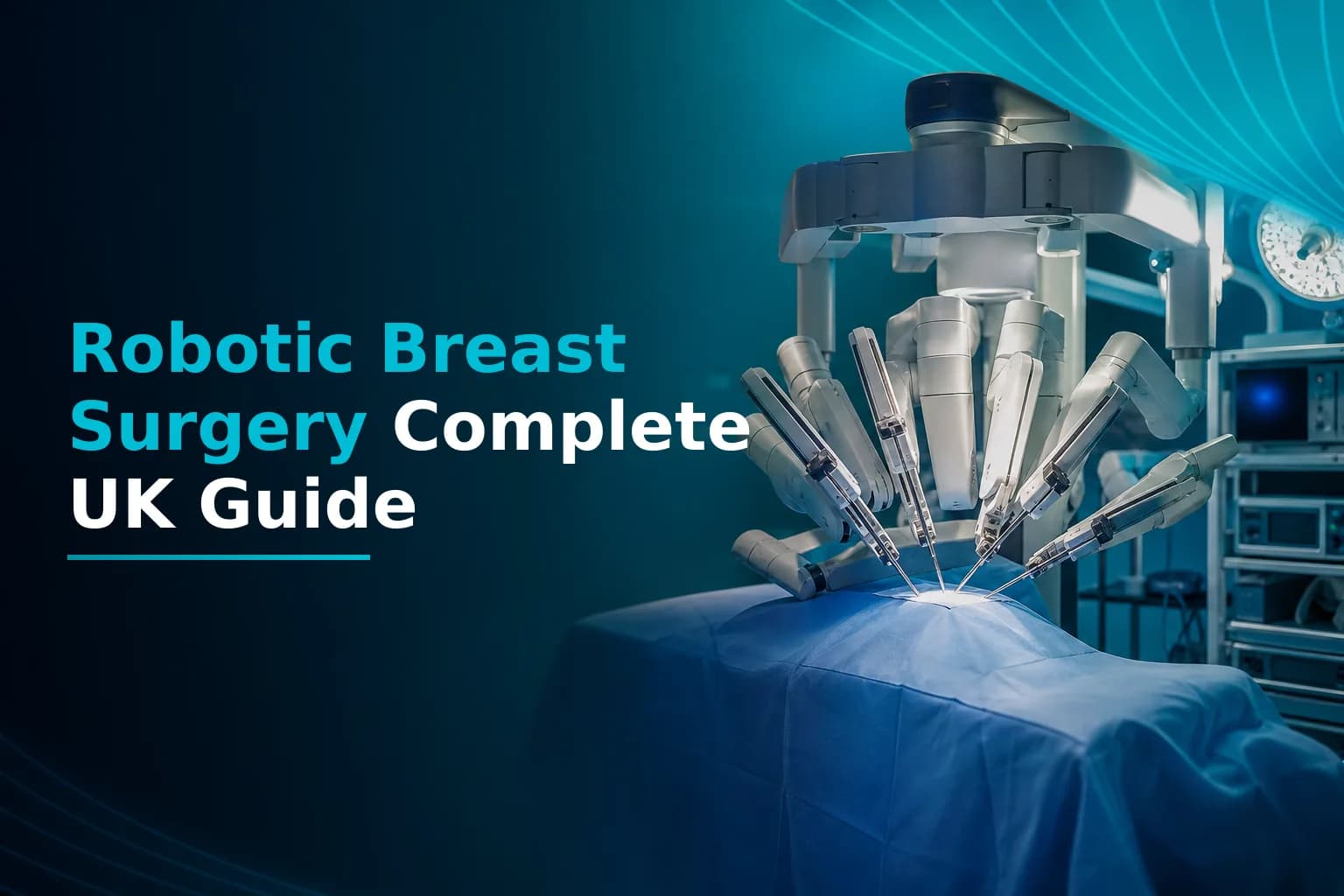
A Diagnosis Can Feel Overwhelming. You Have Options
Hearing the words "breast cancer" changes everything in an instant. In the days that follow, you may face unfamiliar medical terms, rapid appointments, and decisions that feel both urgent and impossibly large. One of the most important choices you will face is which type of surgery to have and whether newer robotic techniques might be appropriate for your situation.
This guide is written for women in the UK who want to understand their surgical options clearly. It explains what robotic breast surgery is, how it compares to traditional approaches, and why some UK patients choose to explore specialist care abroad when access or availability becomes a concern at home.
What Is Robotic Breast Cancer Surgery?
Robotic breast surgery uses a computer-assisted system to help a surgeon perform highly precise movements through very small incisions. The surgeon sits at a console in the operating theatre and guides robotic arms from there. The machine doesn't operate independently. The system translates the surgeon's hand movements into precise, scaled actions at the surgical site, filtering out natural hand tremor and providing a magnified three-dimensional view of the tissue.
According to a review published on PubMed Central, robotic systems in breast surgery offer enhanced three-dimensional views, greater instrument control, and tremor filtration. These features may reduce damage to surrounding tissue compared to conventional open surgery.
Robotic techniques are currently used in breast cancer care for several types of procedures:
- Nipple-sparing mastectomy — removing breast tissue while preserving the nipple and surrounding skin
- Skin-sparing mastectomy — removing the breast while keeping most of the skin envelope intact for reconstruction
- Sentinel lymph node biopsy — checking whether cancer has spread to nearby lymph nodes
- Axillary lymph node dissection — removing lymph nodes from the armpit area when cancer has spread there
- Immediate breast reconstruction — rebuilding breast shape at the time of mastectomy
It is important to understand that robotic surgery does not change the goal of the operation. The aim remains the same: to remove cancer safely. What it may change is how that removal is carried out and what the recovery and cosmetic results look like.
Why Are Patients Choosing Robotic Surgery?
Robotic surgery is not right for every patient. But for suitable candidates, several potential advantages are worth understanding before meeting your surgeon.
A study published on PubMed Central found that robot-assisted mastectomy with immediate breast reconstruction was associated with lower rates of skin necrosis and better patient-reported outcomes in areas such as physical well-being and sexual well-being, compared to conventional techniques.
Patients and surgeons frequently highlight the following potential benefits:
- Smaller, more discreet incisions: The robotic approach typically uses shorter cuts, often placed in less visible locations such as the armpit, which may result in less noticeable scarring.
- Preserved natural appearance: Nipple-sparing techniques may help maintain the natural look of the breast, which matters deeply to many women for body image and emotional well-being after surgery.
- Reduced damage to surrounding tissue: The precision of robotic instruments may limit damage to nerves, blood vessels, and healthy tissue during the procedure.
- Improved arm and shoulder function after lymph node surgery: A study published on PubMed Central found that patients who had robotic-assisted axillary lymph node dissection showed significantly better upper limb function in the weeks following surgery compared to those who had conventional dissection.
- High cosmetic satisfaction: In one series of robotic nipple-sparing mastectomies, researchers found that approximately 86.7% of patients rated their cosmetic outcome as excellent and 13.3% as good, with all patients expressing satisfaction with scar appearance and wound position.
These findings are encouraging. However, robotic breast surgery is still an evolving field. Longer-term data and wider comparative studies are ongoing. Your surgical team will advise whether you are a suitable candidate based on your diagnosis, tumour characteristics, breast anatomy, and overall health.
Robotic Surgery vs Traditional Breast Surgery: A Comparison
Understanding the key differences may help you ask better questions when you meet your surgeon and review your options.
| Feature | Robotic Surgery | Traditional Open Surgery |
|---|---|---|
| Incision size | Small, often placed in the armpit | Larger incision directly on the breast |
| Visualisation | 3D magnified view on surgeon's console | Standard direct or 2D view |
| Surgeon control | Console-guided robotic arms | Direct hand movements |
| Nipple preservation | Often possible with nipple-sparing technique | Possible but technically more demanding |
| Scarring | Typically minimal and discreet | Larger visible scar on the breast |
| Availability in the UK | Limited — specialist centres only | Widely available on the NHS |
| Cost consideration | Higher — specialist equipment required | Covered by the NHS for eligible patients |
Cancer Research UK provides a clear overview of all breast cancer surgery types, which is a useful starting point when reviewing your options with your care team.
Why Some UK Patients Explore Treatment Abroad
Most women diagnosed with breast cancer in the UK receive excellent care through the NHS. However, some patients find themselves in situations where they want to explore alternatives. This might be because of waiting times, limited access to specialist techniques, or a desire for more personalised planning time.
According to Cancer Research UK, only 68.4% of people in England started their first treatment within 62 days of an urgent referral in December 2025, against an 85% target. This target has not been consistently met for a decade.
According to Breast Cancer Now, delays in diagnosis and treatment can cause significant anxiety and may affect a patient's ability to make fully informed decisions about their care in a timely way.
Beyond waiting times, patients frequently describe other reasons for exploring care abroad:
- Access to robotic techniques not yet widely available on the NHS: Robotic nipple-sparing mastectomy remains limited to a small number of specialist centres in the UK, most of which operate privately. Routine access through NHS pathways is not yet established.
- Seeking a second surgical opinion: Women who have been advised to have a full mastectomy sometimes want to know whether breast-preservation techniques, including robotic approaches, could be suitable for them. This is a reasonable and well-supported decision.
- Personalised care and dedicated planning time: Some patients feel that busy NHS clinics leave limited time for detailed discussion. Many international centres allocate longer consultations for individual treatment planning.
- Cost of private care within the UK: Private robotic surgery in the UK can be significantly more expensive than equivalent procedures at accredited international centres with lower operating costs.
None of these reasons reflect poorly on the NHS. They reflect the reality that breast cancer is a deeply personal journey, and different women have different priorities, timelines, and circumstances.
Why India Is Emerging as a Destination for Robotic Breast Surgery
More patients from the UK and other countries are choosing robotic breast surgery in India. Several factors contribute to this.
Modern hospital infrastructure: Leading hospitals in cities such as Mumbai, Delhi, Bengaluru, Chennai, and Hyderabad operate robotic surgical systems alongside full multidisciplinary cancer teams. Many of these institutions hold international accreditation and follow evidence-based clinical standards.
English-speaking care teams: Most senior oncologists and breast surgeons at major Indian hospitals are trained and communicate in English. Many hold international qualifications or have completed fellowships abroad. Language is rarely a barrier for UK patients.
Experienced surgical teams: India performs a high volume of robotic breast procedures annually. Volume of experience is a recognised factor in surgical proficiency and outcome quality across surgical disciplines.
Dedicated international patient services: Many leading Indian hospitals have international patient coordinators who assist with medical record review, visa support letters, accommodation arrangements, and coordination with UK-based follow-up doctors.
Comprehensive treatment pathways: Patients typically receive coordinated care that includes pre-operative assessment, surgery, monitored recovery, and a detailed handover plan for continuing treatment at home.
Cost of treatment: Robotic breast surgery in India is typically a fraction of the cost of equivalent private procedures in the UK or Western Europe. This makes specialist care accessible to patients who cannot afford UK private rates or who prefer not to wait for NHS availability.
What a UK Patient's Journey Looks Like
If you are considering robotic breast surgery abroad, understanding the step-by-step process can help reduce uncertainty and give you a clearer picture of what to expect at each stage.
- Online consultation: The journey begins with an online consultation — typically a video call with a specialist surgeon or international care coordinator who reviews your situation and answers your initial questions.
- Medical report review: You share your diagnostic documents — including your mammogram, biopsy results, histopathology report, MRI scans, and any existing treatment plan. The surgical team reviews these to assess your suitability for robotic surgery.
- Personalised treatment plan: Based on your reports, the surgeon prepares a recommendation specific to your case — including which technique is advised, the expected timeline, likely costs, and what recovery will involve.
- Travel arrangements: Once you decide to proceed, the international team helps with visa letters, hospital admission paperwork, accommodation near the hospital, and airport transfers.
- Surgery: You arrive in India, complete pre-operative assessments, and undergo surgery. Most robotic breast procedures are performed under general anaesthesia and require a short hospital stay.
- Recovery: You spend time recovering in India before being cleared to fly home. Knowing what physical activities are safe during this period is important. You may find it helpful to read about lifting and carrying restrictions after robotic breast cancer surgery and when you can safely drive again after robotic surgery.
- Follow-up care: Your care team provides a detailed discharge summary for your UK GP and oncologist. Virtual follow-up consultations can continue after you return home. If you experience symptoms such as nerve pain or numbness after robotic breast cancer surgery, your care team should advise on what is expected and when to seek further review.
An Expert Perspective on Robotic Breast Surgery
Surgeons who perform robotic breast procedures consistently note that the technology extends surgical capability rather than replacing surgical judgement. The robotic system filters hand tremor, provides a magnified three-dimensional view of tissue planes, and enables precise dissection in confined anatomical spaces. These capabilities matter most in complex reconstructive work.
For procedures such as nipple-sparing mastectomy, where preserving the blood supply to the nipple-areola complex is critical, this level of precision may reduce the risk of complications such as nipple loss or partial tissue necrosis compared to conventional techniques. That said, patient selection remains the most important factor. Not every breast cancer diagnosis will be suitable for a robotic approach, and a thorough pre-operative assessment is essential before any plan is finalised.
This is true whether surgery takes place in the UK or abroad. Any centre you consider, whether domestic or international, should be willing to explain clearly why a robotic approach is or is not right for your specific diagnosis and what their experience with the procedure is.
When to Talk to Your Doctor
If you are considering robotic breast surgery — whether within the UK or abroad — the most important first step is to discuss this with your current care team. Ask whether robotic techniques are available and whether your case would be suitable. If you feel you need more information or a second surgical opinion, you are entitled to request one through your GP or directly via a private referral.
This article is for general information and is not a substitute for medical advice. Always consult your oncologist or care team about your specific situation.
Request a Personalised Robotic Surgery Assessment
If you would like a personalised assessment from a specialist robotic breast surgeon, you can upload your medical documents for expert review. The surgical team will assess your reports and advise on whether robotic breast surgery may be an option for you — with no obligation to proceed.
You are welcome to share any of the following:
- Mammogram or ultrasound reports
- Biopsy reports
- PET-CT scans
- MRI scans
- Histopathology reports
- Existing treatment plans
Uploading your reports takes a few minutes. The response you receive will be specific to your diagnosis — not a generic answer.