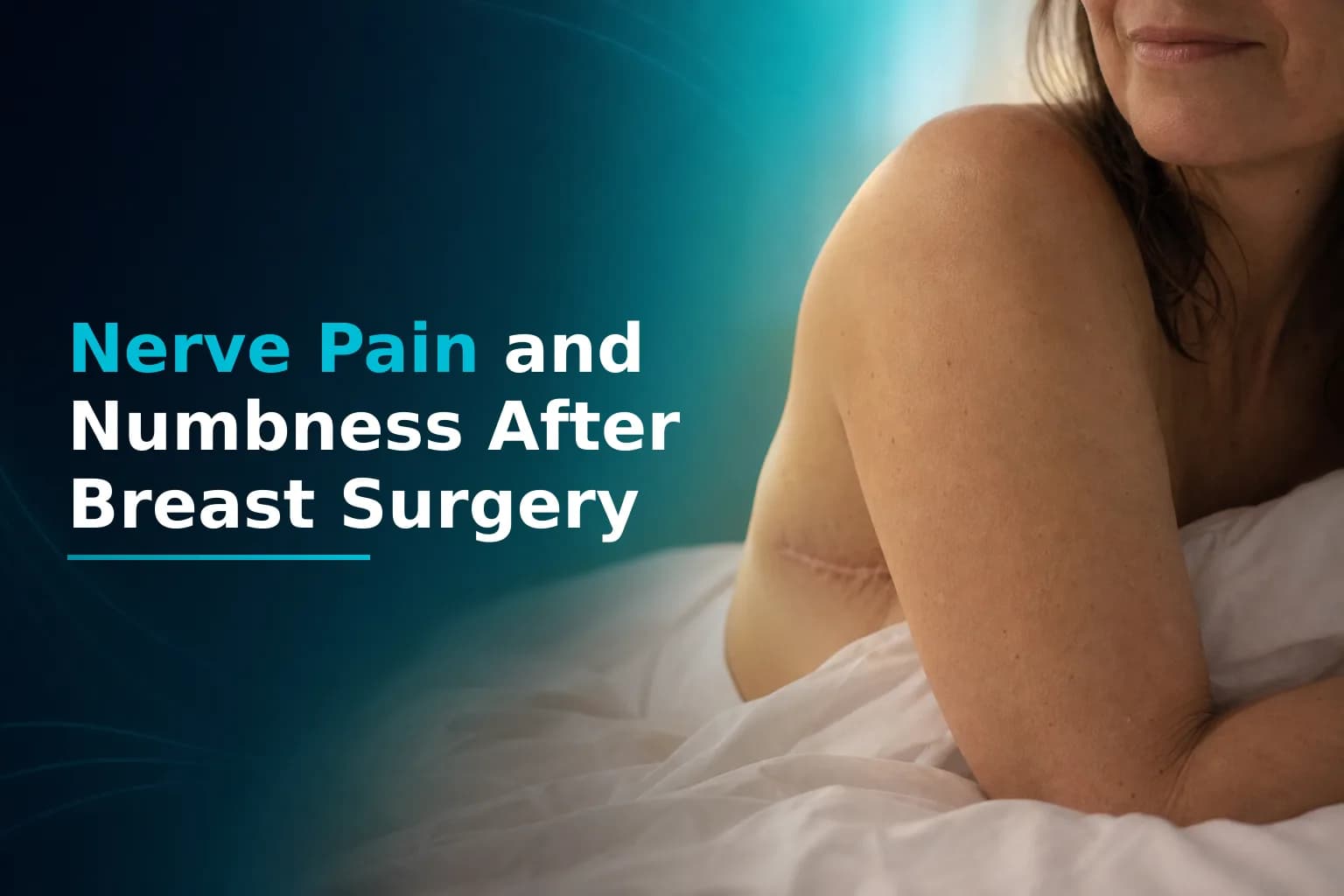
Why Nerve Pain and Numbness Happen After Breast Surgery
Numbness, tingling, or soreness after breast cancer surgery is common. It happens because the breast and surrounding tissue have many small nerves. During open or robotic surgery, some nerves may be stretched, bruised, or cut. This can happen even with careful surgery.
The nerves most often affected run through the chest wall and armpit. One important nerve is called the intercostobrachial nerve. It carries feeling to the inner upper arm and armpit. When this nerve is disturbed during surgery, you may notice numbness, tingling, burning, or shooting pain in those areas.
Doctors call this post-mastectomy pain syndrome (PMPS). PMPS can happen after any type of breast surgery—including lumpectomy, mastectomy, and robotic procedures. The American Cancer Society describes PMPS as ongoing nerve pain in the chest wall, armpit, and/or arm that does not go away after surgery.
How Common Are Nerve Symptoms After Breast Surgery?
Nerve pain or numbness after surgery happens to many breast cancer patients. These are among the most common side effects patients face after surgery.
PMPS affects many breast cancer surgery patients. Research found post-mastectomy pain syndrome in about 28% of patients. Rates in different studies range from about 22% to more than 50%, depending on surgery type, whether lymph nodes were removed, and other patient factors.
Everyone's experience is different. Some people feel mild tingling that goes away within a few weeks. Others have stronger discomfort that takes longer to ease. Your own outcome will depend on several factors explained below.
What Does Nerve Pain Feel Like?
Nerve symptoms after breast surgery feel different for each person. Sensations may change over time. What you feel in the first week can be very different from what you feel later. Common descriptions include:
- Numbness or a loss of feeling in the chest, armpit, or upper arm
- Tingling or a steady pins-and-needles sensation
- A burning feeling that may be constant or come and go
- Sharp or shooting pain through the chest, shoulder, or arm
- Hypersensitivity—where even a light touch feels painful or uncomfortable
- A pulling or tight feeling near the surgical scar
Cancer Research UK notes that after mastectomy you might experience numbness, tingling, or shooting pain in your armpit, upper arm, shoulder, or chest wall. These come from how nearby nerves were affected during surgery.
Some people describe a feeling like an electric shock when touched, or deep aching that regular pain relievers do not help. If you notice any of these symptoms, especially if they feel severe or are getting worse, tell your care team right away.
Does Robotic Breast Surgery Affect Nerve Risk Differently?
If you are considering robotic breast surgery, you may wonder if it causes fewer nerve problems than open surgery. This is an important question that researchers are studying.
Robotic breast surgery uses very small instruments guided by a surgeon at a console. The cuts are smaller than in open surgery. The robotic camera shows a magnified, detailed view inside the body. These features may help surgeons see and avoid nerves better than open surgery allows.
Research found that the consistent pathway of a key sensory nerve shows why robotic nipple-sparing mastectomy may better preserve feeling. The procedure's smaller incision and more precise approach may help protect nerves that carry feeling to the skin.
This shows promise. However, no surgery can prevent all nerve effects. The breast area has many nerves running in different directions, so some nerve involvement is often unavoidable. Ask your surgeon what to expect for your specific procedure. They can give you the most accurate information based on your anatomy and the planned surgery.
Who Is at Higher Risk for Nerve Symptoms?
Certain factors may increase nerve pain or numbness severity or how long it lasts. Understanding these risk factors helps you and your care team plan ahead.
- Axillary lymph node dissection: Removing many lymph nodes from the armpit carries higher risk of nerve effects than removing just a few nodes (sentinel lymph node biopsy). Cancer Research UK notes that nerve damage after lymph node surgery can cause numbness, tingling, and pain in the arm and area nearby.
- Younger age: Patients under age 50 may have longer-lasting nerve pain after surgery.
- Radiation therapy: Radiation to the chest or armpit after surgery can affect nerves in that area and add to nerve pain.
- History of chronic pain: Having long-term pain before surgery may increase the risk of nerve pain after surgery.
- Certain chemotherapy medicines: Some chemo drugs can affect nerves by themselves. If chemo is part of your treatment, your care team will discuss how it may combine with surgery side effects.
- Anxiety or depression: Emotional health affects how you feel pain and handle it. Taking care of your mental health is an important part of your overall care.
Having one or more of these risk factors does not mean you will have severe or lasting nerve pain. It just means you should talk honestly with your surgeon before surgery so you have a plan ready if symptoms happen.
How Long Does Nerve Pain Last?
For many people, nerve symptoms slowly improve over time. Nerves heal much slower than skin or muscle. Recovery can take weeks or months or longer.
In the first days and weeks after surgery, some numbness and tingling is normal. Many patients find these feelings are worst a few months after surgery, then slowly get better. For some people, feeling in the chest and arm returns almost completely within the first year. For others, numbness directly under the arm may stay.
Some people have pain that continues beyond three months. Doctors call this a longer-term (chronic) condition at that point. This does not mean the pain is permanent or cannot be treated. Many ways exist to manage pain even at this stage, and your care team can work with you to find what helps.
How Is Post-Surgical Nerve Pain Managed?
No single treatment works for everyone. Your care team will work with you to build a plan that fits your needs, symptoms, and overall health. Options include:
Medications
Several types of medicines may help with nerve pain after breast surgery. The American Cancer Society notes that options your doctor may consider include anti-inflammatory drugs, certain antidepressants, topical capsaicin cream, and lidocaine patches applied to the skin. Some anticonvulsant medicines—originally made to treat seizures—are also used to calm nerve pain signals. Do not start or change any medicine without talking to your care team first. They will choose options that fit your situation and health history.
Physical Therapy
A physical therapist with breast cancer recovery experience can be a great partner. They can guide you through gentle stretching, scar tissue massage, and exercises to restore shoulder and arm movement. Physical therapy may also help prevent or treat cording (axillary web syndrome), described below. Starting physical therapy early—as soon as your surgeon says it is safe—tends to give the best results.
Nerve Blocks and Pain Procedures
For pain that continues despite medicine and physical therapy, your team may refer you to a pain specialist. Procedures such as nerve blocks—where medicine is injected near the affected nerves—can help some patients. Other options may include radiofrequency treatments, which use gentle controlled heat to reduce pain signals, or for severe or persistent pain, more advanced approaches.
Mind-Body Approaches
Pain is shaped by both body and mind. Relaxation techniques, mindfulness practices, guided imagery, and counseling may help you handle ongoing discomfort. These are not replacements for medical treatment, but they can be part of a broader plan—especially when pain affects your mood or daily activities.
What Is Cording?
A related side effect is axillary web syndrome, often called cording. You might notice tight, rope-like bands of tissue under your arm after surgery. These bands may extend toward the inner arm or toward the wrist. They can make it hard to raise your arm fully or straighten your elbow.
Cording tends to appear in the first few weeks after surgery, especially if lymph nodes were removed from the armpit. It can feel scary, but it is usually not dangerous. With physical therapy and stretching exercises, most people improve a lot. Tell your care team right away if you notice tightness or cord-like bands under your arm—early treatment tends to work best.
Living Well With Ongoing Symptoms
If you have lasting nerve pain or numbness, know it is real. Many breast cancer survivors deal with this, along with other parts of recovery. Support groups, in person and online, can connect you with others who understand what you are going through.
Keeping a daily symptom log can be useful. Note when pain feels worse, what activities bring it on, and what helps. This information helps your care team adjust your pain plan over time.
It is also wise to protect any numb area from injury. If you have reduced feeling in part of your arm or chest, be careful around hot surfaces, sharp objects, and extreme temperatures. You may not notice damage as quickly in those areas.
Small changes at home can make daily life more comfortable. Using a cushion to support your arm when resting, changing how you sleep, or adjusting how you carry items can reduce pressure on healing nerves. Over time, these changes can really improve how you feel.
When to Talk to Your Doctor
Talk to your care team if:
- You notice new or worsening numbness, tingling, or pain after surgery
- Pain is disrupting your sleep, mood, or ability to do daily tasks
- You develop tightness or cord-like bands in your arm or armpit
- Symptoms have not improved, or are getting worse, over weeks or months
- You feel your current pain management plan is not helping enough
Talking to your care team early helps. Do not wait until pain becomes severe to ask for help. There are many options available, and you should be as comfortable as possible during your recovery.
This article is for general information and is not a substitute for medical advice. Always consult your oncologist or care team about your specific situation.