
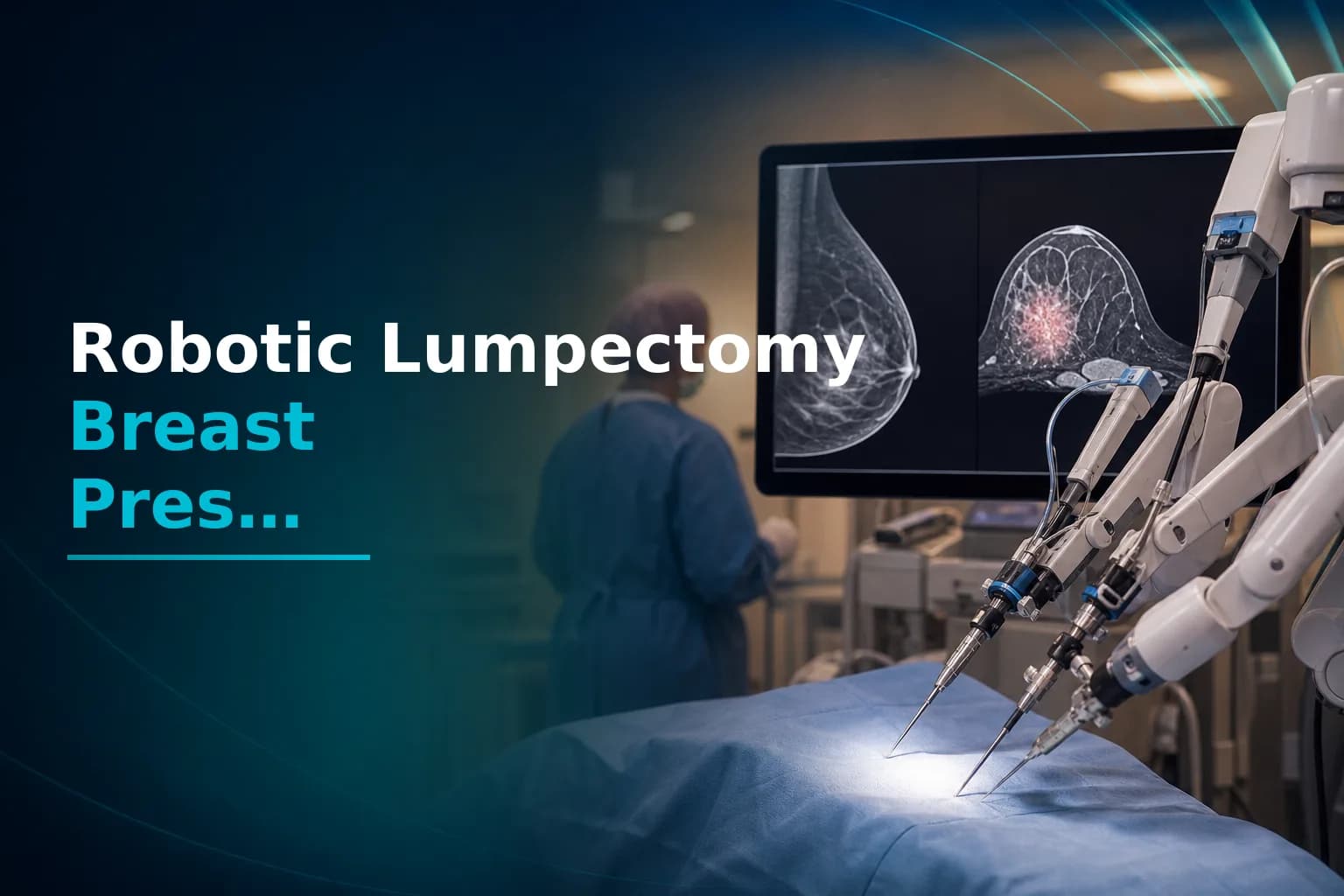
If your breast tumour sits close to the nipple or deep in the breast, mastectomy may not be your only option. Techniques including oncoplastic breast conservation and robotic-assisted lumpectomy can reach difficult tumour positions while hiding the surgical scar. Whether you qualify for preservation depends on tumour size, location, and the skills of your surgical team.
What Does Centrally Located Mean?
A centrally located breast tumour sits behind or very close to the nipple-areola complex - the darker area of skin and nipple at the front of the breast. Most surgeons define the central zone as within roughly 2-3 cm of the nipple.
Deep tumours are different. A deep tumour sits far from the skin surface, close to the chest wall at the back of the breast. Both positions create a surgical challenge. The surgeon must remove the tumour with a clear border of healthy tissue around it, keep the breast shape, and make the scar as small as possible.
Because of these challenges, some women are told that mastectomy is their only safe choice. Your surgeon may have good reasons for this. But it's worth asking whether conservation is technically possible for your specific tumour.
How Common Are Central Breast Tumours?
Between 5% and 20% of all breast cancers arise in the central region of the breast, according to a 2024 review published in Frontiers in Oncology (Franceschini et al., 2024). That's a lot of women diagnosed each year. Yet many of them are offered mastectomy quickly, without learning about other options.
Surgical options have improved in recent years. It helps to know what's available before you talk to your surgeon.
Why Central Tumours Complicate Preservation
Two main concerns explain why many surgeons are cautious about saving a breast when the tumour is centrally placed.
The first is oncological safety. A tumour within 2 cm of the nipple means cancer may have spread into the nipple-areola complex. If undetected cancer is in the nipple that stays, the risk of local recurrence rises.
The second concern is cosmetic. Removing tissue from the centre of the breast can cause a noticeable dent or change in shape. With a standard approach, the surgeon cuts near or around the areola, leaving a visible scar on the front of the breast and potentially changing the nipple even if it is kept.
Newer oncoplastic and robotic approaches handle both concerns better than traditional methods.
Which Surgical Approach Might Work for You?
Your main options are: standard central lumpectomy, oncoplastic or robotic-assisted breast conservation, and mastectomy. Each differs in how it affects the nipple, scarring, recurrence risk, and follow-up care.
How Different Surgical Approaches Compare for Central or Deep Breast Tumours
| Decision factor | Standard central lumpectomy | Oncoplastic or robotic-assisted conservation | Mastectomy |
|---|---|---|---|
| Nipple-areola outcome | Usually removed along with the tumour if within 2 cm of nipple | May be preserved or reconstructed depending on exact tumour position | Removed; nipple-sparing techniques available for carefully selected patients |
| Best suited for | Tumours near the nipple where the patient prefers to keep the breast even without the nipple | Tumours requiring larger central volume removal; women wanting breast shape and minimal visible scarring | Tumours with confirmed nipple involvement; large tumours relative to breast size; patient preference or high genetic risk |
| Typical scar location | Around the areola or on the front of the breast - visible | In the armpit or under the breast fold - largely hidden from view | Across the chest wall |
| Radiotherapy after surgery | Yes - routinely recommended to reduce recurrence risk in remaining tissue | Yes - standard after all breast-conserving surgery | Sometimes - depends on tumour size, grade, and nodal involvement |
| Local recurrence monitoring | Closer follow-up advised; modestly higher local recurrence rate compared with non-central lumpectomy in published data | Standard mammographic surveillance; outcomes data from robotic-assisted approaches still emerging | Lowest local recurrence risk in the treated breast |
Sources: recurrence data from Kim et al., 2024; survival comparison from Wu et al., 2022; guidance on surgical margins from NICE NG101.
Mastectomy offers the lowest risk of local recurrence in the treated breast. However, a large SEER database study found that women with centrally located breast cancer who chose breast-conserving surgery had similar overall survival rates to those who had mastectomy (Wu et al., 2022). The right choice depends on your individual tumour characteristics, your priorities about body image, and your surgical team's skills.
Oncoplastic Techniques for Central Tumours
Oncoplastic breast surgery combines cancer removal with plastic surgery principles in the same operation. For centrally placed tumours, this allows several specific techniques that a standard surgical team may not offer.
The Grisotti reconstruction removes the tumour and nipple-areola complex through a carefully planned cut, then rotates a flap of nearby breast tissue into the gap. This maintains breast shape, with the scar positioned where the nipple-areola complex was. This technique works best in women with moderate to larger breasts, though the 2024 review in Frontiers in Oncology found it feasible for smaller breasts when combined with appropriate volume adjustments (Franceschini et al., 2024).
Chest wall perforator flaps use a small amount of tissue drawn from just outside the breast - from the skin over the ribs or chest wall - to fill the space left after central removal. These can work well for women with smaller breasts where there is less spare breast tissue to rearrange internally. The same 2024 review described these flaps as another option for patients who would otherwise be advised to have mastectomy.
Therapeutic mammoplasty restructures the breast using a reduction mammoplasty pattern to remove the central tumour and reshape what remains. It tends to suit women with medium to large, somewhat drooping breasts, and is often paired with a matching reduction of the other breast to achieve symmetry.
All of these techniques require a surgeon with specific oncoplastic training. Many centers don't offer these techniques. That's why many women are recommended mastectomy without learning about these other options.
How Robotic Surgery Changes the Picture
Robotic-assisted breast surgery is not the same as a standard open lumpectomy. The surgeon uses slim robotic instruments controlled from a console. Entry is through ports in the armpit or under the breast fold, not through an incision over the tumour.
For central and deep tumours, this approach offers three specific advantages over conventional open surgery.
First, the robotic camera provides a magnified, three-dimensional view inside the breast. For a tumour sitting near the chest wall, this level of visibility allows the surgeon to work with greater precision while removing the tumour and an adequate margin of healthy breast tissue. A hand-guided approach through an incision over a deep tumour does not offer the same clarity.
Second, because the entry points are hidden in the armpit or under the breast, there is no scar on the front of the breast at all. For central tumours - where a traditional incision would need to sit around the nipple or directly over the tumour - this changes the cosmetic result significantly.
Third, robotic instruments can flex and rotate at angles that hands cannot do inside a confined space. For deeply placed tumours, this range of movement may allow removal of a clean tissue margin without opening a large area of breast tissue.
Single-port robotic breast-conserving surgery via the armpit is now the subject of active clinical research, as registered on ClinicalTrials.gov (NCT06738654). Specialist robotic breast surgery programmes in India, South Korea, and parts of Europe are leading this research. You can read more about how tumour size and conservation interact in our article on tumour size and breast-conserving surgery with robotic lumpectomy.
What Happens to the Nipple?
This is the question most women with central tumours ask first. The answer depends on exactly where the tumour sits and whether imaging or biopsy shows any involvement of the nipple tissue.
If the tumour sits directly behind the nipple, or if MRI or biopsy shows cancer cells in the nipple-areola complex, the nipple will usually need to be removed - whether you choose lumpectomy or mastectomy. Nipple reconstruction is possible as a separate procedure later if you want it.
If the tumour is near but not directly involving the nipple-areola complex, some oncoplastic approaches can preserve it or reconstruct it at the time of surgery. The Grisotti technique is one such option. Modified periareolar approaches that reshape the remaining tissue around a preserved nipple are another.
For women who are considering mastectomy, nipple-sparing techniques may still be an option in carefully selected cases. Our article comparing robotic nipple-sparing versus skin-sparing mastectomy outcomes covers what matters most in that decision.
Can Chemotherapy Before Surgery Make Conservation Possible?
Neoadjuvant chemotherapy - chemotherapy given before surgery rather than after - can shrink a tumour before it is removed. For central breast tumours that are too large or too close to the nipple for safe conservation at diagnosis, good shrinkage from neoadjuvant treatment may make breast-saving surgery possible.
NICE guideline NG101 includes neoadjuvant chemotherapy as an option in early and locally advanced breast cancer where tumour characteristics make it appropriate (NICE NG101 recommendations). Whether it is right for your tumour depends on your receptor status, tumour grade, and overall health picture. For a more detailed look at how this works in practice, see our article on how neoadjuvant chemotherapy expands robotic surgery options.
Who Is Not Likely to Be a Candidate for Preservation?
Not every woman with a central or deep tumour will be suitable for breast conservation, and knowing this is important. Preservation is generally not advisable when:
- The tumour is large relative to breast size, making a clear margin very difficult without removing most of the breast
- Imaging or biopsy confirms cancer in the nipple-areola complex itself
- Multiple separate areas of the breast are affected - known as multifocal or multicentric disease
- A BRCA1 or BRCA2 gene variant is present, raising the risk in remaining breast tissue to a level where more complete removal is advised
- Radiotherapy after surgery is not possible due to previous chest radiation or other health factors, since radiotherapy is part of standard care after conservation
If one or more of these applies to your situation, your surgeon's recommendation is very likely well-founded. It is still reasonable to ask whether any of these factors could change - for example, whether neoadjuvant chemotherapy could reduce the tumour sufficiently, or whether a specialist centre with oncoplastic or robotic expertise might offer a different technical view.
Seeking a Second Opinion
A second surgical opinion is a normal part of the breast cancer treatment process, and doesn't mean your surgeon made a mistake. If you have been told that mastectomy is your only option for a central or deep tumour, a review by a surgeon who specialises in oncoplastic or robotic breast techniques may offer a different perspective on what is technically feasible for your specific case.
Second opinions can be requested through the NHS. They can also be obtained from specialists at private or international centres, particularly in countries where robotic breast surgery programmes are more established. If you are weighing your current UK surgical plan against what might be available elsewhere, consider consulting the Art of Healing Cancer team - they work with specialist robotic breast surgeons and can review your scans and explain what's possible for you.
If you would like to make a discreet initial enquiry, the team at BreastCancer.One can help you understand your options privately. Female coordinators are available for all initial conversations.
When to Talk to Your Doctor
Speak to your breast surgeon or clinical nurse specialist if:
- You have been told mastectomy is your only option and you want to understand whether preservation is technically possible for your tumour
- You want to know whether oncoplastic or robotic-assisted techniques are available through your care team or at a nearby specialist centre
- You are considering neoadjuvant chemotherapy to reduce the tumour before making a final surgical decision
- You are unsure whether your nipple-areola complex is involved and what that means for your choices
- You are thinking about seeking a second opinion from a specialist breast unit
This article is for general information and is not a substitute for medical advice. Always consult your oncologist or care team about your specific situation.