Neoadjuvant chemotherapy - chemo given before your operation rather than after it - may shrink your tumour enough to change which surgery you are offered. For some women with invasive breast cancer, this shift is meaningful: it can move the conversation from mastectomy toward breast conservation, or allow a less invasive robotic technique that was not possible before treatment began. Understanding how this works helps you ask better questions at your post-chemo surgical review.
What is neoadjuvant chemotherapy?
Most people think of chemotherapy as something that comes after surgery. Neoadjuvant chemotherapy - often called NAC or pre-operative chemo - works the other way round. You receive a course of chemotherapy first, your team monitors how your tumour responds, and surgery takes place once the course is complete.
Doctors use this approach for several reasons. It may make a tumour easier to remove. It gives your oncology team important information about how your cancer responds to treatment while the tumour is still visible on scans. And for many women, it improves surgical options. NICE guideline NG101 - the main UK clinical framework for early and locally advanced breast cancer - recommends NAC for certain higher-risk subtypes, including HER2-positive and triple-negative disease.
How chemotherapy can shrink your tumour before surgery
The main way NAC affects surgery is through tumour shrinkage. When chemotherapy kills cancer cells, the primary tumour becomes smaller - sometimes significantly. This reduction in size opens new surgical options.
A meta-analysis of ten studies involving 4,756 women found that neoadjuvant chemotherapy increased the rate of breast-conserving therapy from 49% to 65% compared with surgery-first approaches. In other words, many women who might have needed a mastectomy before chemotherapy were able to have a lumpectomy after their tumour shrank.
This shift - from a larger, more invasive operation to a smaller one - is called downstaging, and it is an important conversation to have with your oncology team before treatment begins. Not every woman will respond enough to change her surgical options, but many do. For more on the tumour size thresholds surgeons use when assessing conservation eligibility, see our article on how tumour size affects breast-conserving surgery and robotic lumpectomy.
What a pathological complete response means for your surgery
When chemotherapy destroys all detectable cancer cells in the breast - and sometimes the lymph nodes too - the result is called a pathological complete response (pCR). Your surgeon will only confirm whether you achieved a pCR after examining the tissue removed at operation. Scans alone cannot confirm this.
The likelihood of achieving a pCR varies by cancer subtype. A large meta-analysis of pCR outcomes suggests that around 40% of women with triple-negative breast cancer may achieve a pCR, compared with around 15% for some hormone receptor-positive subtypes. A pCR is associated with improved longer-term outcomes in high-risk subtypes such as triple-negative and HER2-positive disease.
Importantly, you don't need to achieve a pCR to benefit from NAC surgically. Even partial shrinkage may still allow breast conservation if the remaining disease is small, contained, and allows for clear margins. Your surgeon will assess the actual state of your breast after treatment, not just compare it to before chemotherapy.
How do breast conservation and mastectomy compare after neoadjuvant chemotherapy?
| Feature | Breast-conserving surgery (lumpectomy) | Robotic nipple-sparing mastectomy |
|---|---|---|
| Typical candidate after NAC | Good tumour response; single tumour site; favourable tumour-to-breast ratio | Large residual tumour; multifocal disease; high genetic risk (e.g. BRCA mutation) |
| Breast tissue kept | Yes - most breast tissue remains in place | No - breast tissue removed; implant or flap reconstruction available |
| Nipple preserved | Usually yes, unless the tumour sits directly behind the nipple | Possible when the nipple is not involved and overlying skin is healthy |
| Typical return to daily activity | 1-3 weeks for most women | 4-6 weeks; longer if reconstruction involves a flap procedure |
| Radiotherapy after surgery | Usually recommended following lumpectomy | Depends on pathology and nodal status - discuss with your team |
These are general comparisons, not clinical predictions for any individual. The right operation depends on your specific tumour biology, how well your cancer responded to chemotherapy, your breast anatomy, and your own priorities. A full surgical assessment after completing chemotherapy - not the plan drawn up before you started - is the most accurate basis for this decision.
Where robotic surgery fits in after chemotherapy
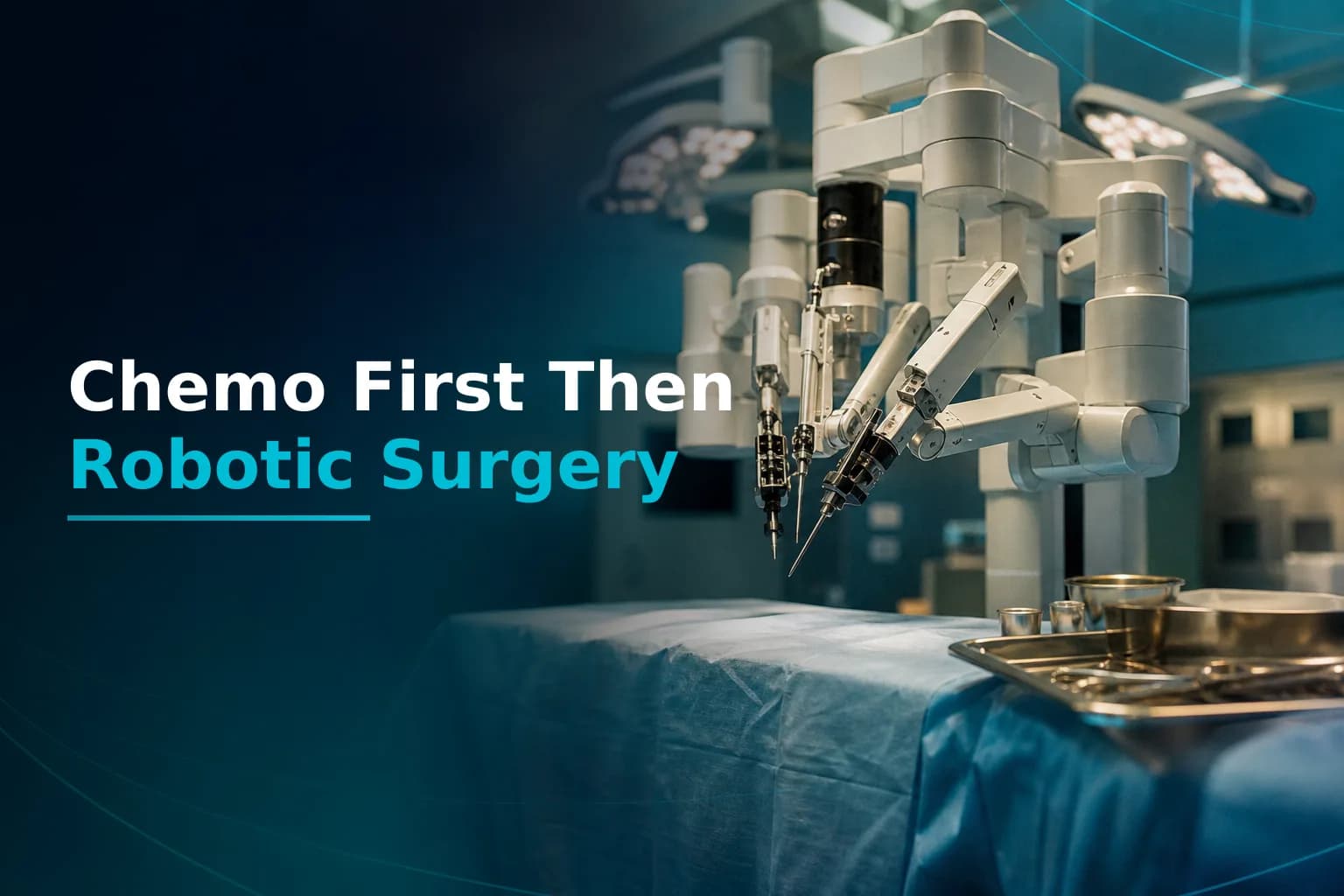
Robotic breast surgery allows surgeons to operate through very small incisions using a robotic system. This can result in less visible scarring, reduced blood loss, and - in some studies - a lower rate of certain complications compared with open surgery. The robotic approach is relevant at the post-NAC stage in two main ways.
For women who become eligible for breast-conserving surgery after tumour downstaging, robotic or robotic-assisted oncoplastic lumpectomy may achieve clear margins through smaller incisions, with a better cosmetic result than conventional open surgery. The goal is to remove the cancer while preserving the shape and appearance of the breast as much as possible.
For women who still need a mastectomy after NAC, robotic nipple-sparing mastectomy may be an option. A study comparing robotic and conventional nipple-sparing mastectomy found that nipple necrosis rates were significantly lower in the robotic group, alongside reduced blood loss. Crucially, research on nipple-sparing mastectomy after NAC suggests that prior chemotherapy does not significantly increase the risk of nipple loss or wound complications, and should not be viewed as a barrier to this technique.
Robotic breast surgery is available at only some hospitals. In the UK, most NHS centres don't yet offer robotic breast surgery, and private hospitals vary in their experience with these techniques. Our article on robotic breast surgery access on the NHS covers the current situation in more detail.
Who may not be a candidate for breast conservation after NAC
Honesty matters here, because not every woman who has neoadjuvant chemotherapy will become eligible for breast-conserving surgery. Several factors may mean that mastectomy remains the safer or more appropriate choice, even after completing a full chemotherapy course:
- The tumour has not responded enough, leaving a large residual mass that cannot be removed with clear margins through lumpectomy
- Multiple tumour deposits are present across the breast (multifocal or multicentric disease)
- Skin or chest wall involvement remains after treatment
- A confirmed BRCA1 or BRCA2 mutation, which increases your lifetime risk of new breast cancers
- Your own informed preference after a full discussion of the trade-offs with your surgical team
It is also worth knowing that most women who have breast-conserving surgery after NAC will need radiotherapy to the remaining breast tissue as part of their overall treatment. This is standard practice, not a sign that surgery went wrong. Your oncology team will outline the full sequence of treatment before you make any decisions.
How your surgical team reassesses you after chemotherapy
Once you finish your course of neoadjuvant chemotherapy, your team will do a detailed re-staging assessment before confirming the surgical plan. This typically includes a breast MRI, ultrasound, and sometimes a mammogram, to see how much residual disease remains and where it sits within the breast.
The findings from this reassessment determine your surgical options at that specific point in time. A plan that seemed fixed before chemotherapy began may look very different after a strong treatment response. This is the moment to talk about breast conservation, robotic techniques, and reconstruction options with your surgeon - even if those conversations seemed irrelevant at the start of your treatment.
Timing, recovery, and the window before surgery
There is typically a gap of four to six weeks between finishing neoadjuvant chemotherapy and having surgery. This allows your body to recover from the effects of treatment so that surgery and wound healing can proceed safely. Your team will monitor your blood counts and general health throughout this period.
A review of post-NAC surgical timing suggests that moderate delays - broadly in the range of four to eight weeks - do not appear to worsen outcomes for most patients. Your team will advise on the right timing based on your individual recovery.
Many women find the waiting period before surgery emotionally and physically draining. Sleep disruption, heightened anxiety, and fatigue are common. Some find over-the-counter sleep support options helpful during this time.
Considering robotic surgery in India after chemotherapy in the UK
For women receiving neoadjuvant chemotherapy on the NHS, a clear decision point arrives once treatment is complete: do you proceed with your UK team's surgical plan, or do you use the post-chemo assessment period to explore options that may not be readily available locally - including robotic breast surgery in India?
Some UK women choose to complete their chemotherapy close to home and then travel to India for robotic breast surgery during the post-NAC interval.
Specialist centres in India perform robotic nipple-sparing mastectomy and robotic oncoplastic lumpectomy with experienced teams who do many of these procedures. Costs may be lower than UK private care, and wait times for surgery may be shorter. The four-to-eight-week window after chemotherapy ends gives you enough time to request your clinical records, arrange a remote review of your post-chemo imaging, and plan travel if this route interests you.
If you are weighing your current UK surgical plan against international surgical options, it is worth having your post-chemotherapy imaging and pathology reviewed by a specialist team before committing. You might get a remote review of your imaging and pathology from an international team to help you understand whether a robotic approach would work for your situation.
For practical guidance on coordinating chemotherapy in the UK with surgery abroad - including how to share clinical records and plan follow-up care - see our full article on splitting your breast cancer care between India and the UK.
When to talk to your doctor
Speak with your oncologist before neoadjuvant chemotherapy starts to ask how your surgical options might change depending on your response to treatment. Revisit this conversation when chemotherapy is complete, at your post-NAC imaging review, so you understand your current eligibility for breast conservation and robotic techniques based on how you actually responded. If you feel the range of surgical options has not been fully explored, requesting a second opinion before committing to any operation is a reasonable and common step.
This article is for general information and is not a substitute for medical advice. Always consult your oncologist or care team about your specific situation.