
What Invasive Breast Cancer Actually Means
Hearing the words invasive breast cancer can be frightening. Many women assume invasive means the cancer has spread throughout the body. In most cases, it has not. The term means cancer cells have grown beyond the milk ducts or lobules where they first formed, into the surrounding breast tissue.
Invasive ductal carcinoma (IDC) is the most common form. Mayo Clinic notes it begins in a milk duct and extends into breast tissue, accounting for the majority of all breast cancer diagnoses. Invasive lobular carcinoma is the second most common type. Both are treatable, and surgery is usually the first step in the care plan.
Understanding your diagnosis in plain terms helps you ask better questions and make more confident choices about which surgical path may suit you best.
Surgery as the Starting Point
For most women with invasive breast cancer, surgery is a central part of treatment. NHS guidance describes two main surgical options: breast-conserving surgery, which removes the tumour and a margin of healthy tissue while preserving most of the breast; and mastectomy, which removes the whole breast.
Which option is right for you depends on the tumour size, position, grade, your overall health, and what matters to you personally. For many women, breast-conserving surgery is achievable. For others, mastectomy may be the safer clinical decision. It is worth discussing both routes carefully with your surgical team.
Surgery for invasive cancer also usually involves assessing or removing lymph nodes under the arm. Your surgeon may do this at the same time as the breast operation, to confirm whether any cancer cells have spread beyond the breast.
Understanding Robotic Breast Cancer Surgery
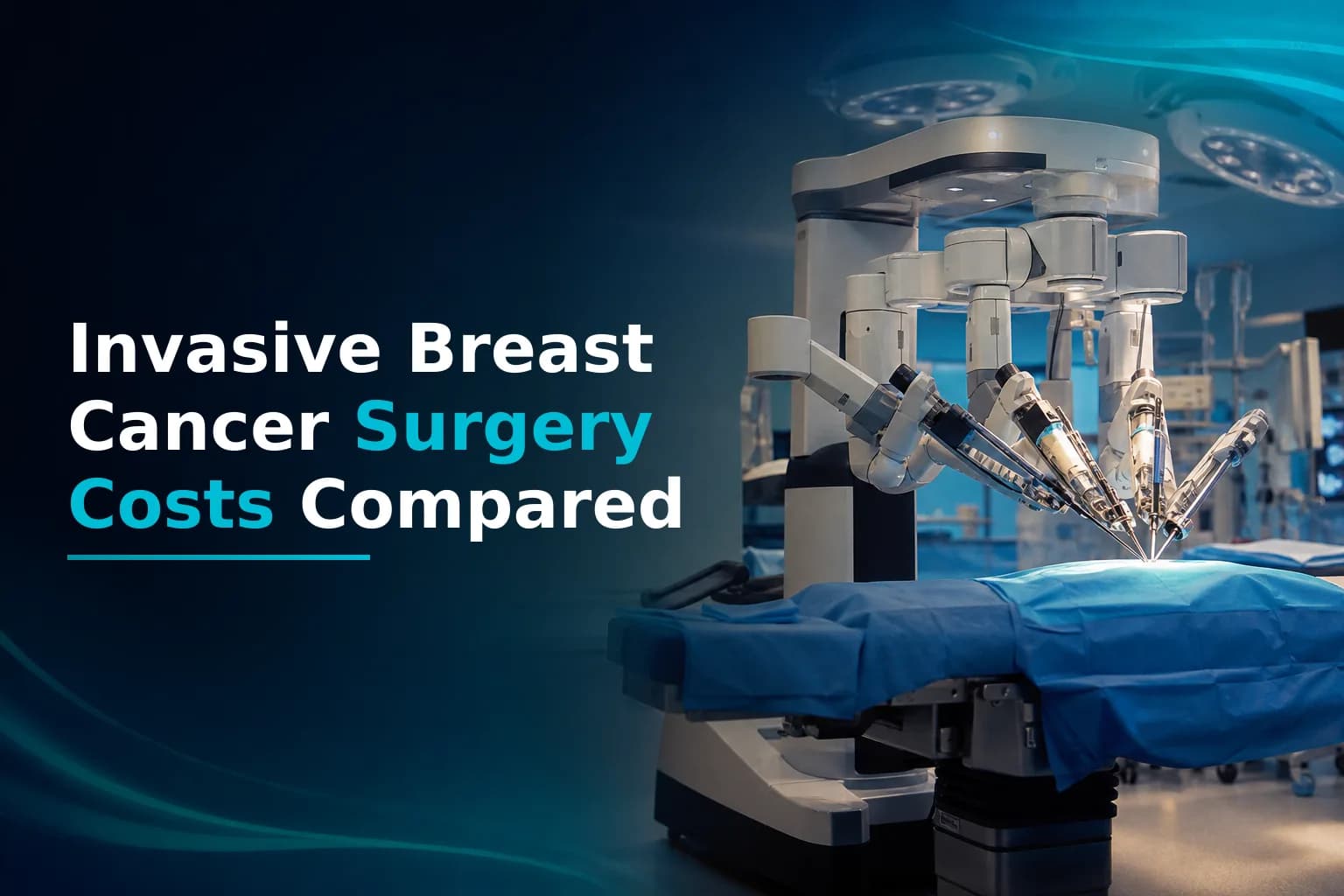
Robotic breast surgery uses a computer-guided system (most commonly the da Vinci Surgical System) to carry out operations through small keyhole incisions rather than a single large opening. The surgeon sits at a console and controls robotic arms fitted with tiny instruments and a high-definition camera. The robot does not act independently; every movement is directed by the surgeon.
Research published by the National Institutes of Health found that robotic systems allow surgeons to access narrower surgical fields, identify small structures more clearly, and filter out natural hand tremor, which supports greater precision throughout the procedure.
In breast cancer surgery, robotic techniques may be used for:
- Nipple-sparing mastectomy: removing breast tissue while preserving the nipple and overlying skin for better reconstruction results
- Robotic lumpectomy: removing the tumour with a clear margin while keeping most of the breast
- Axillary lymph node dissection: clearing affected lymph nodes through a small incision under the arm
A comprehensive review published in PMC (National Institutes of Health) found that robotic breast surgery aims to reduce invasiveness, improve the surgeon's field of view, lower postoperative complications, and achieve better cosmetic results compared with conventional open surgery.
Why More Women Are Asking About Robotic Surgery
Interest in robotic breast surgery among women recently diagnosed with invasive cancer tends to focus on four areas:
- Cosmetic results. Smaller incisions leave less visible scarring. For nipple-sparing mastectomy with reconstruction, the visible difference can be significant.
- Recovery. Less trauma to surrounding tissue may mean reduced pain and a faster return to daily life.
- Precision. The magnified three-dimensional view and tremor-filtered instruments help surgeons work with a level of accuracy that is harder to achieve with the naked eye alone.
- Functional recovery. The NIH research found that patients undergoing robotic axillary lymph node dissection had significantly better upper limb function at one and three months after surgery, compared with those who had conventional open procedures.
Robotic surgery is not appropriate for every patient. Your tumour stage, size, and location all influence which technique your surgeon will recommend. Clinical suitability always comes before technology preference.
Robotic Surgery vs Traditional Surgery: A Direct Comparison
| Factor | Traditional Open Surgery | Robotic-Assisted Surgery |
|---|---|---|
| Incision size | Larger open incision | Small keyhole incisions |
| Surgical view | Direct or standard camera | Magnified 3D high-definition camera |
| Precision | Direct hand movement | Computer-assisted, tremor-filtered |
| Visible scarring | More prominent | Reduced |
| Recovery period | Standard | Potentially shorter |
| NHS availability | Widely available | Limited to select specialist centres |
| Evidence base | Long-established | Growing; comparable oncological safety reported in meta-analyses |
A 2024 meta-analysis published in PMC found that robotic nipple-sparing mastectomy showed reduced nipple necrosis rates compared with conventional approaches and showed good short-term results, though longer-term data continue to be gathered. Both techniques can achieve good clinical results. Your surgeon's recommendation is based on your specific clinical picture.
What Breast Cancer Surgery Costs in the UK
The NHS provides breast cancer surgery free at the point of use. However, patients don't always get treatment quickly. According to Cancer Research UK, only around 68% of patients in England started their first cancer treatment within 62 days of an urgent referral as of late 2025. The national target is 85%. England has not met this target consistently since December 2015.
For women who choose to go privately in the UK, costs vary widely. A private breast surgeon consultation typically costs £200 to £400. Full surgical procedures (mastectomy, lumpectomy, or mastectomy with reconstruction) can range from several thousand pounds to above £20,000, depending on procedure complexity, the hospital, and what the quoted package includes.
Cancer Research UK advises that private cancer treatment costs are highly variable. Always ask for a detailed written estimate before committing to any private provider. These figures are example ranges, not fixed prices.
NHS vs UK Private Care: Key Differences at a Glance
| Consideration | NHS | UK Private |
|---|---|---|
| Cost | Free at point of use | Self-pay or insured; can be substantial |
| Waiting time | 62-day target (not consistently met) | Generally faster access |
| Robotic surgery access | Limited to select specialist centres | Available at some private hospitals |
| Surgeon choice | Allocated by trust | Patient selects their surgeon |
| Continuity of care | Multidisciplinary team | Direct relationship with chosen specialist |
Both pathways have advantages and disadvantages. NHS care is thorough and free but can involve delays that add real anxiety to an already difficult time. Private UK care offers faster scheduling and surgeon choice, but at a cost many families find difficult to absorb. This gap is one reason some women begin to look beyond UK borders.
Why Some UK Patients Explore Treatment Abroad
Choosing to seek treatment in another country is not a decision women make lightly. Those who explore it typically arrive at this point through one or more of the following routes:
- Faster access to surgery. When you have been told you have invasive cancer, a months-long wait for an operation creates significant psychological strain. Some women choose to travel to receive treatment within days rather than weeks.
- Access to robotic expertise. Robotic breast surgery is not yet widely available on the NHS, and private UK options may still be limited or costly. Some specialist robotic programmes abroad operate at considerably higher procedure volumes than comparable UK units.
- A genuine second opinion. Some women who have been advised that mastectomy is their only option find, after specialist review, that breast-conserving robotic surgery may be achievable. A second opinion from a high-volume expert can materially change the treatment plan.
- Overall cost. When private UK surgery runs to tens of thousands of pounds, the combined cost of flights, accommodation, and surgery abroad can be comparable or considerably lower while offering faster access and specialist technology.
If you are weighing these factors, our detailed guide Robotic Breast Surgery: A Complete Guide for UK Patients Exploring Your Options at Home and Abroad may help you structure your thinking.
Why India Is Drawing UK Patients for Robotic Breast Surgery
India has attracted growing interest from international breast cancer patients. Several factors drive this beyond cost alone:
- Robotic surgical infrastructure. Major private cancer hospitals in India operate da Vinci robotic platforms, with surgical teams trained specifically in robotic breast oncology, including nipple-sparing mastectomy and robotic lumpectomy.
- Experienced breast oncology surgeons. Senior breast surgeons at major Indian cancer centres often trained at leading European and American institutions and carry out significant annual volumes of robotic breast procedures.
- English-speaking care teams. Major international hospitals offer consultations, clinical reports, discharge summaries, and all patient communications in English.
- International patient services. Dedicated teams manage visa invitation letters, airport transfers, accommodation near the hospital, and coordination of all pre-operative assessments.
- Comprehensive treatment pathways. A multidisciplinary team (including oncology, pathology, and reconstruction) reviews and agrees your surgical plan before you travel. Everything is planned before you arrive.
- Comparative cost. Robotic breast cancer surgery in India costs much less than comparable private UK surgery. This makes the total cost of travel plus treatment affordable for many patients who can't afford UK private care.
For a fuller picture of what to expect clinically, see Robotic Breast Cancer Surgery in India: What UK Patients Should Know About Quality, Expertise, and Access.
Your Step-by-Step Journey as a UK Patient
Here is what the process typically looks like for a UK woman considering robotic breast cancer surgery in India:
- Online consultation. You share your medical reports with the specialist team. A video consultation is arranged, usually within a few days of your enquiry.
- Medical report review. Breast oncologists and the treating surgeon review your scans and pathology. You receive a written second opinion and a personalised surgical recommendation.
- Treatment planning. A complete plan is prepared: surgery type, timeline, reconstruction options if applicable, and any additional treatments required after surgery.
- Travel arrangements. The international patient team provides a visa invitation letter, flight guidance, accommodation near the hospital, and local transfers.
- Surgery. You arrive, complete pre-operative checks, and the agreed surgical team performs your robotic procedure.
- Recovery. You recover in the hospital and then nearby facilities until your doctor clears you to fly home. You get written instructions for care during travel and when you return to the UK.
- Follow-up from home. Your team manages follow-up remotely when clinically appropriate. They share results and treatment recommendations with your NHS oncologist to ensure continuity of care.
A detailed walk-through of this whole process is available in From Diagnosis to Surgery: A UK Breast Cancer Patient's Real-World Guide to Accessing Robotic Treatment in India.
What to Upload for Your Personalised Assessment
To receive an accurate and useful surgical assessment, share as much diagnostic information as possible. This typically includes:
- Mammogram and breast ultrasound images and reports
- Biopsy report and histopathology results
- MRI scan images and written report
- PET-CT scan results, if available
- Any existing treatment plans or multidisciplinary team letters
- A summary of treatments already received, including hormone therapy or chemotherapy
An Expert Perspective on Timing and Technology
Surgeons who specialise in robotic breast oncology frequently note two themes when speaking with international patients: timing and technology access. When a woman has invasive breast cancer and faces a long wait for surgery, the psychological burden is real. For some patients, combining a faster timeline with a surgeon who has high-volume robotic experience represents a meaningful difference in their overall care experience.
Specialists consistently stress that good outcomes depend on rigorous pre-operative planning. Robotic technique is one part of a larger plan. Your staging must be accurate. You must fully understand your receptor status. Reconstruction options, where relevant, should be agreed before surgery begins. Patients who do best arrive with complete documentation and a fully agreed treatment pathway.
When to Talk to Your Doctor
If you are diagnosed with invasive breast cancer, speak to your care team as soon as possible about your surgical options. Ask whether breast-conserving surgery is possible in your specific case, whether robotic techniques are available locally, and what the expected timeline for your procedure is. If you are considering a second opinion or exploring treatment abroad, let your GP or oncologist know. They can provide a referral letter and share your records to support any additional specialist consultation you arrange.
This article is for general information and is not a substitute for medical advice. Always consult your oncologist or care team about your specific situation.