
Introduction: Common Concerns After an HR+ Diagnosis
A breast cancer diagnosis is overwhelming. When test results show hormone receptor positive cancer, many women feel both relief and worry. Relief because this type is well understood. Worry about what treatment will involve.
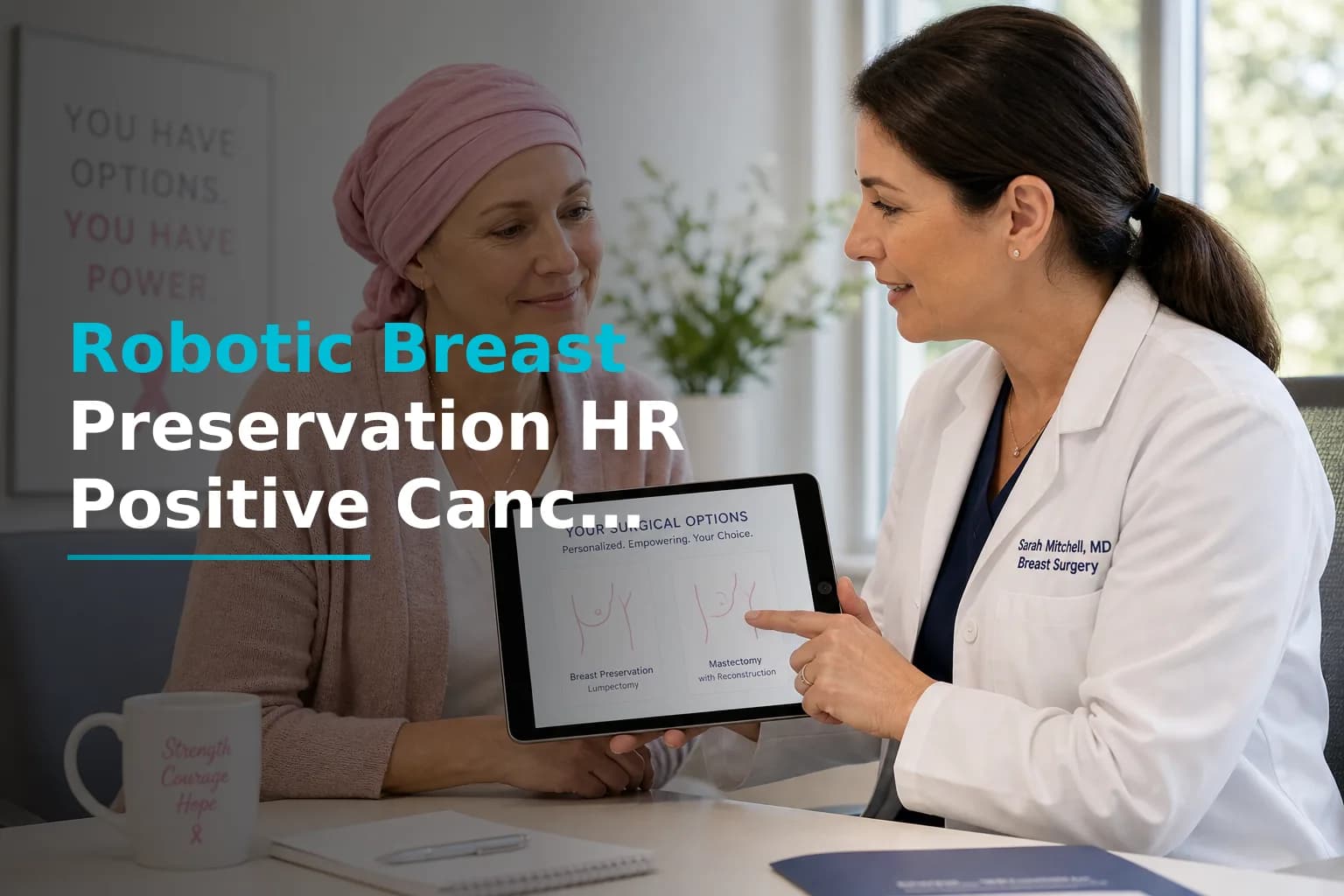
Many women ask: Do I have to lose my breast? For many with HR+ cancer, the answer is yes—preservation is an option. Specialist centres now offer robotic breast-conserving surgery, and patients across the UK are choosing this option.
This guide covers what an HR+ diagnosis means, what robotic breast conservation involves, and how some UK patients are accessing this technology through specialist hospitals in India.
What Does Hormone Receptor Positive Mean?
Hormone receptor testing checks whether breast cancer cells have receptors for oestrogen (ER) or progesterone (PR). When these receptors are present, doctors call the cancer hormone receptor positive, or HR+.
According to Breast Cancer Now, about 8 in 10 breast cancers in the UK are oestrogen receptor positive. This makes HR+ the most common type of breast cancer in the UK.
You can read more about what these test results mean for treatment planning at Cancer Research UK's hormone receptor testing page.
Because HR+ cancer cells feed on hormones, treatment usually includes hormone therapy—medicines like tamoxifen or aromatase inhibitors—plus surgery and sometimes radiotherapy. According to Cancer Research UK, doctors usually give hormone therapy after surgery, but may sometimes use it before surgery to shrink the tumor. Treatment typically lasts five years or longer.
Your hormone receptor status matters because it affects your whole treatment plan and surgical choices.
Preservation or Mastectomy for HR+ Breast Cancer?
For many years, doctors removed the whole breast (mastectomy) as standard treatment. Today, research shows that breast-conserving surgery (BCS), also called a lumpectomy, works well for eligible patients with non-metastatic breast cancer.
A recent systematic review and meta-analysis found that breast-conserving treatment works well for eligible patients with non-metastatic breast cancer. For many women with early-stage HR+ disease, the evidence supports discussing preservation as a real option with your oncology team.
Whether breast-conserving surgery suits you depends on tumor size, location, lymph node involvement, and your overall health. Your multidisciplinary team (MDT) will review all these factors before recommending a surgical approach.
If you want to understand more about this decision in practice, our guide Early-Stage Breast Cancer and Robotic Lumpectomy: A UK Patient's Guide to Breast-Preserving Surgery in India covers eligibility and what to expect in more detail.
What Is Robotic Breast Conservation Surgery?
Robotic breast conservation surgery uses a surgeon-controlled robotic system with multiple arms carrying small instruments to remove cancer tissue through smaller incisions than conventional open surgery.
The surgeon sits at a console and guides the robotic arms with precision. The system converts the surgeon's hand movements into scaled, tremor-free movements inside the body. A magnified high-definition camera gives a detailed view not possible with the naked eye.
A comprehensive review published in PubMed Central found that robotic breast surgery leads to less bleeding during surgery, shorter hospital stays, less pain after surgery, and better cosmetic results compared with conventional approaches. Precision and the removal of hand tremor are key advantages of robotic surgery.
This technique is not yet available in all hospitals, but a growing number of specialist centres now offer it—including several high-volume hospitals in India.
Why Women With HR+ Breast Cancer Are Considering Robotic Preservation
For women with HR+ breast cancer, several reasons make robotic breast-conserving surgery worth exploring:
- Smaller incisions may mean less visible scarring, which matters to many patients.
- Research shows shorter hospital stays and less pain after surgery, which may help you get back to daily life and start hormone therapy faster.
- Greater surgical precision may help remove all cancer cells while keeping more healthy tissue.
- Better cosmetic results may support emotional recovery along with physical recovery.
- For women whose HR+ tumor shrank well with neoadjuvant hormone therapy before surgery, a smaller remaining tumor may make robotic preservation easier.
Robotic vs Traditional Breast-Conserving Surgery: A Comparison
| Feature | Robotic Surgery | Traditional Open Surgery |
|---|---|---|
| Incision size | Smaller, keyhole-type incisions | Larger incision at tumor site |
| Surgical precision | High—tremor elimination, scaled movements | Depends on surgeon hand control |
| Bleeding during surgery | Research shows less | Usually more |
| Hospital stay | Research shows shorter | Usually longer |
| Pain after surgery | Research shows less | Usually more |
| Cosmetic result | Research shows better | Variable |
| Available in UK | Specialist centres only | Widely available |
Both approaches can give good results when an experienced surgical team performs them. The right choice depends on your situation and should be made with your care team.
Why Some UK Patients Explore Treatment Abroad
Most women with HR+ breast cancer in the UK get care through the NHS, and NHS care is thorough and evidence-based. However, some patients look beyond the UK for specific reasons:
- Waiting times: Some patients want surgery sooner than current waiting lists allow.
- Access to robotic technology: Robotic breast surgery is not yet available across all NHS trusts.
- Second opinions: Some women want a specialist assessment before choosing a surgical plan.
- Preference for preservation: If your local team recommended mastectomy but you want to keep your breast, you may seek a specialist robotic opinion.
- Cost: In some cases, the all-in cost of traveling to an accredited hospital abroad costs the same as or less than private treatment in the UK.
Exploring options abroad is a personal choice. It is not a rejection of NHS care. Many women use a specialist opinion from abroad as extra information to discuss with their UK team.
Why India Is a Growing Choice for UK Patients
India has become a major destination for UK patients seeking specialist oncology and robotic surgery for several reasons:
- International accreditation: Several major hospital groups in India have Joint Commission International (JCI) accreditation, the global standard for hospital quality.
- English-speaking surgical teams: Surgeons, oncologists, and patient coordinators at leading Indian cancer centres speak fluent English throughout the patient journey. All reports and plans are in written English.
- High surgical volume: India's largest cancer hospitals perform many breast cancer procedures each year. High volume means deep surgical expertise.
- Established robotic programs: Specialist Indian centres have well-developed robotic surgery programs with dedicated breast cancer teams.
- Complete treatment pathways: From staging and surgery to hormone therapy planning and radiotherapy coordination, specialist Indian centres manage the entire breast cancer pathway.
- International patient support: Dedicated teams handle visa letters, accommodation near the hospital, airport transfers, and liaison with your UK GP and oncologist.
For a broader overview of what to look for when considering India as a destination, see our guide Robotic Breast Cancer Surgery in India: What UK Patients Should Know About Quality, Expertise, and Access.
A UK Patient's Step-by-Step Journey
- Gather your documents. Collect your biopsy report, hormone receptor test results, mammogram, MRI or PET-CT scans, and any treatment plan your UK team discussed with you.
- Upload for a specialist assessment. Share your documents securely with the specialist team. Most leading Indian centres offer a remote review before you commit to anything.
- Receive a written opinion. A specialist will review your case and provide a written assessment covering surgical options, suitability for robotic conservation, and a proposed treatment plan.
- Discuss with your UK team. Use the specialist opinion to talk further with your oncologist or breast surgeon in the UK.
- Plan your travel. If you decide to go ahead, the hospital's international patient team will help with travel, visa letters, accommodation, and scheduling.
- Have treatment in India. Surgery is typically followed by a short hospital stay. Many robotic breast conservation patients go home within one to two days.
- Return home and continue follow-up. Your Indian team will give you a full discharge summary and treatment records. You can continue hormone therapy and follow-up with your GP or NHS team when you return.
For a more detailed account of this process, read our guide From Diagnosis to Surgery: A UK Breast Cancer Patient's Real-World Guide to Accessing Robotic Treatment in India.
Documents to Upload for Your Assessment
When you request a specialist assessment, please include as many of the following as you can:
- Biopsy report (including ER, PR, and HER2 status)
- Mammogram images or reports
- MRI of the breast
- PET-CT scan (if you had one)
- Histopathology report
- Any current or proposed treatment plan from your UK team
- A brief summary of your medical history and any other conditions
You do not need a complete set of documents. A partial upload is still useful and lets a preliminary assessment begin.
Expert Perspective: Neoadjuvant Hormone Therapy and MDT Planning
For some women with HR+ breast cancer, the oncology team may recommend neoadjuvant hormone therapy—hormone therapy given before surgery rather than after. The goal is to shrink the tumor before surgery. This may increase your chances of being suitable for breast-conserving surgery, including robotic conservation, where mastectomy might otherwise be needed.
Any decision about the timing and order of hormone therapy and surgery should be made by a multidisciplinary team (MDT) that includes a breast surgeon, medical oncologist, radiation oncologist, radiologist, and pathologist. Specialist centres in India with dedicated breast cancer programs use the same MDT model as UK centres.
The key point is that treatment planning for HR+ breast cancer is not a single decision—it is an ongoing process that may change as the tumor responds to treatment. Patients should ask their team about all the options at each stage.
Request a Personalised Robotic Breast Surgery Assessment
If you have been diagnosed with HR+ breast cancer and want to understand whether robotic breast conservation may be an option for you, you can request a specialist assessment from an experienced oncology team in India.
Please upload your mammogram, biopsy report, PET-CT scan, MRI, histopathology results, and any current treatment plan for a personalised robotic breast surgery assessment from a specialist team. There is no obligation—the aim is to give you the clearest possible information to make a well-informed decision alongside your UK care team.
When to Talk to Your Doctor
Before making any decisions about surgical treatment—including whether to seek care abroad—speak with your oncologist or breast surgeon. If you are interested in robotic breast-conserving surgery and it has not been discussed as part of your care planning, ask whether it is right for your diagnosis, or whether a referral to a specialist centre would help. You have the right to ask questions about all surgical options available to you.
This article is for general information and is not a substitute for medical advice. Always consult your oncologist or care team about your specific situation.