
Can You Breastfeed After a Robotic Lumpectomy?
Many women breastfeed successfully after a robotic lumpectomy, especially from the unaffected breast. The treated breast may produce less milk or none at all if radiotherapy follows surgery. Without radiation, the treated breast may still produce some milk. Your surgeon can advise based on where incisions will be placed and your full treatment plan.
If you are a younger woman with an early-stage breast cancer diagnosis, you may wonder whether breast conservation will affect your ability to breastfeed later. It's a valid question to raise before choosing between lumpectomy and mastectomy.
This article explains what robotic lumpectomy does to breast tissue, how radiotherapy and hormone therapy affect milk production, and what to ask your surgical team if breastfeeding matters to you.
What does a lumpectomy actually remove?
A lumpectomy, also called breast-conserving surgery, removes the tumor and a margin of healthy tissue around it. The rest of the breast stays in place. A mastectomy removes the whole breast instead.
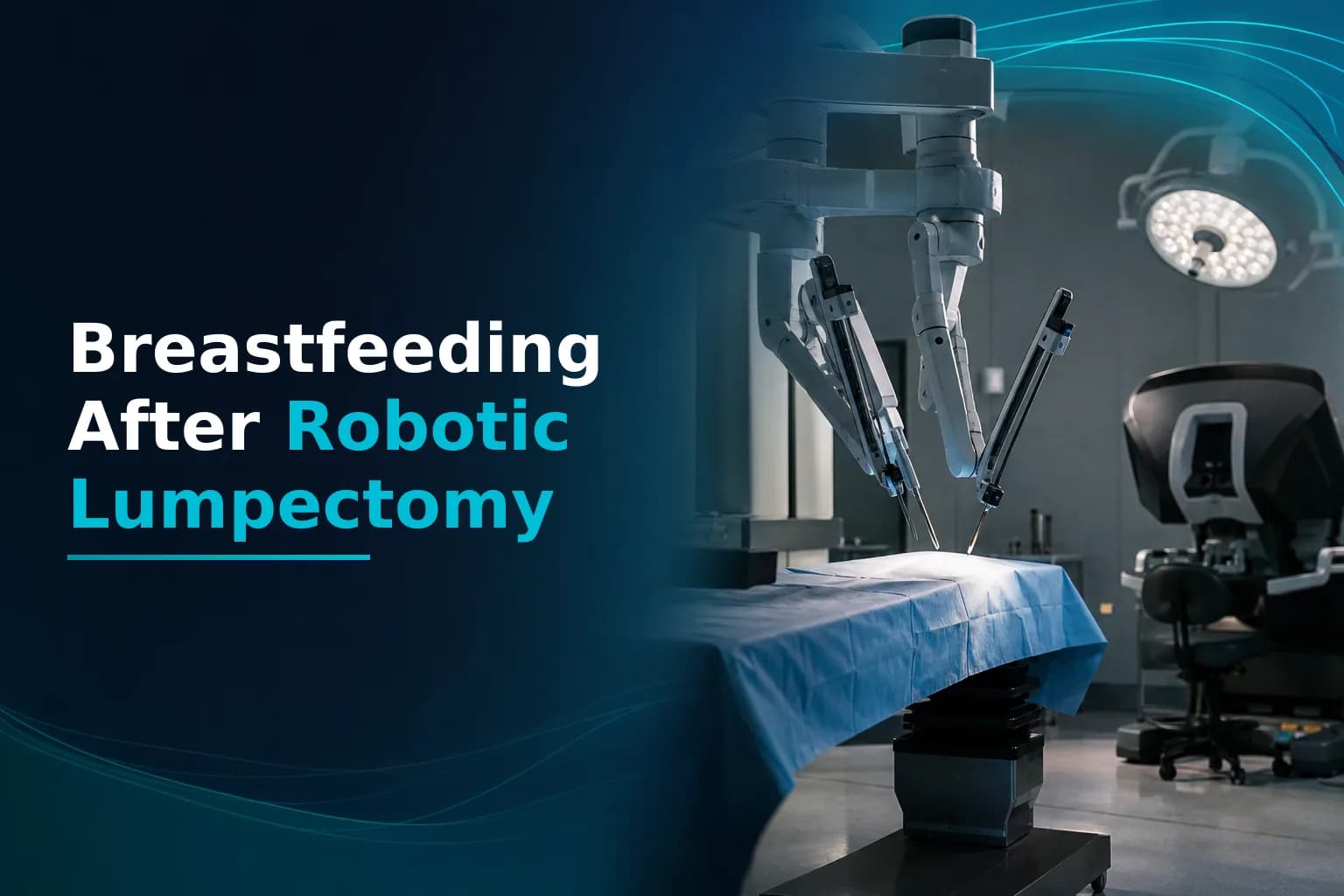
In a traditional lumpectomy, the surgeon makes an incision close to or over the tumor. In robotic-assisted lumpectomy, the surgeon guides fine instruments through small ports using a robotic system. This often allows for a shorter incision, and the port sites can sometimes be placed farther from the nipple-areola complex, depending on the tumor location. This matters for breastfeeding because the main milk ducts run through the tissue directly around the nipple. Incisions placed farther from this area are less likely to damage those ducts.
A study of breast cancer survivors who breastfed after treatment found that inadequate milk supply was a primary concern, with many women relying mostly on the unaffected breast. The location of incisions and how much tissue was removed affected those outcomes.
How is robotic lumpectomy different from traditional surgery?
In a standard open lumpectomy, the surgeon makes an incision directly over or near the tumor. In a robotic approach, small port incisions are placed, and the surgeon performs surgery through those openings using robotic-guided instruments with high-definition camera vision. This typically causes less disruption to surrounding tissue than an open procedure.
A review of the current and future role of robotic surgery in breast cancer notes that robotic techniques offer improved precision and may allow surgeons to reach tumors through incisions in less visible or less functionally sensitive areas. For women concerned about preserving breastfeeding potential, this surgical precision may reduce the risk of damaging milk ducts in selected cases. It does not eliminate that risk, particularly if radiotherapy follows.
Robotic lumpectomy is not available at all hospitals, including many NHS centers. If you want to know whether a robotic approach is possible for your case and how it compares with open surgery for your specific tumor location, ask your specialist directly. Our article on robotic surgery for DCIS and breast conservation may also help you understand how these decisions are made for early-stage disease.
Will the treated breast still produce milk?
The honest answer is: it varies. Several factors affect whether the treated breast can produce milk after a lumpectomy.
- Incision placement - incisions close to the nipple-areola complex are more likely to damage milk ducts than those placed farther away.
- Volume of tissue removed - a larger removal leaves fewer milk-producing glands in the treated breast.
- Whether radiotherapy follows surgery - this is the single biggest factor and is covered in detail below.
- Individual anatomy - some women have more glandular tissue with greater redundancy in their ductal system, which may support partial lactation even after surgery and radiation.
Breast Cancer Now states that if your cancer affected only one breast, breastfeeding is often more successful from the unaffected breast. That breast keeps its full capacity and can, for many women, produce enough milk to breastfeed exclusively.
How does radiotherapy affect milk production after lumpectomy?
Most women who have a lumpectomy need radiotherapy to the treated breast afterwards. Radiotherapy reduces the risk of cancer returning in the same breast. It is a core part of most breast-conservation treatment plans, which is why the two are generally discussed together.
However, radiotherapy to the breast can damage milk-producing tissue. The National Institutes of Health Drugs and Lactation Database (LactMed) states that high-dose breast radiation used to treat cancer can substantially decrease or eliminate subsequent milk production in the treated breast, while leaving the untreated breast unaffected.
In practice, many women who have had lumpectomy followed by radiotherapy find that the treated breast produces very little or no milk. Some women do produce a small amount from the treated side, but supply tends to be lower and less predictable. This is not a reflection of effort or failure - it is a biological consequence of radiation on glandular tissue.
If breastfeeding is important to you, knowing this in advance lets you plan. You may be able to build a good milk supply mostly from the unaffected breast, with some contribution or none from the treated side. A lactation consultant with experience in post-surgical breastfeeding can help you develop a practical feeding plan well before your baby arrives.
What about hormone therapy and breastfeeding timing?
Many women with hormone receptor-positive early-stage breast cancer take hormone therapy after surgery and radiotherapy. The most common medicine for pre-menopausal women is tamoxifen.
Breastfeeding while taking tamoxifen is not advised. Macmillan Cancer Support states that tamoxifen may pass through the bloodstream into breast milk, and women should not breastfeed during treatment or for a period after it ends. Standard hormone therapy for early-stage breast cancer typically runs for five to ten years.
This timeline has significant implications for younger women who plan to have children after treatment. When to pause hormone therapy to conceive and breastfeed is a nuanced question that you should discuss with your oncologist well before treatment begins. Our guide to breast cancer in pregnancy, lactation, and surgical care timelines covers the key planning considerations for women managing treatment alongside family decisions.
Does a robotic approach offer a breastfeeding advantage?
Robotic lumpectomy may offer some advantages for women hoping to preserve breastfeeding potential. Head-to-head studies comparing breastfeeding outcomes specifically between robotic and traditional lumpectomy are still limited, but the surgical reasoning is sound.
Potential advantages of a robotic approach include:
- Smaller incisions, which may reduce overall disruption to ductal tissue
- The ability to position port incisions farther from the nipple-areola complex in certain techniques
- More precise removal of the tumor with potentially less collateral tissue loss
- Improved surgical visibility, which may help the surgeon avoid key structures more reliably
None of these factors guarantee that breastfeeding will be possible. Radiotherapy - which typically follows lumpectomy regardless of technique - remains the main factor limiting future milk production from the treated breast. But discussing the surgical approach with your specialist is still worth doing.
If your UK surgeon has not discussed incision strategy or the breastfeeding implications of your planned surgery in detail, it may help to get another opinion before you commit. You can consult the Art of Healing Cancer team before committing to a UK surgical plan and explore minimally invasive options with surgeons who specialize in breast conservation.
When breastfeeding from one breast is the most likely outcome
Many women in this position breastfeed mostly or entirely from the unaffected breast. This is a well-recognized and supported approach. The unaffected breast can often adapt to higher demand and increase its supply over time - a process sometimes called lactational adaptation.
Steps that may help you prepare include:
- Feeding frequently from birth to build supply on the unaffected side
- Working with a lactation consultant who has experience supporting women after breast surgery
- Letting your midwife and health visitor know about your surgical history early, so they can offer informed support from the start
- Knowing that supplementing with formula where needed is a practical option - it allows you to continue a breastfeeding relationship while meeting your baby's nutritional needs
Breastfeeding after lumpectomy carries no known risk to your baby. You will not pass cancer cells to your baby through breast milk. The concern after surgery and radiotherapy is about the volume of milk the treated breast can produce, not about the safety of the milk itself.
The emotional weight of these decisions matters. Processing a cancer diagnosis while planning a future family can disrupt sleep and heighten anxiety over an extended period. For over-the-counter support during this time, explore Ayurnomics's Sleep and Stress range, which offers evidence-based options that may complement your clinical care.
Questions to raise with your surgeon before you decide
If breastfeeding matters to you, raise it before surgery, not after. Here are specific questions worth bringing to your consultation:
- Where exactly will the incision be placed, and how close is it to the nipple-areola complex?
- How much tissue will need to be removed to achieve clear margins?
- Will I need radiotherapy after surgery, and if so, to what field and dose?
- Will I need hormone therapy, and for how long?
- Does a robotic approach change the incision site compared with open surgery in my specific case?
- Can you refer me to a lactation consultant before I begin treatment so I can plan ahead?
Some women find that the combined effect of surgery plus radiotherapy makes breastfeeding from the treated breast unlikely enough to influence their decision toward mastectomy with reconstruction. Others decide that the chance of breastfeeding from the unaffected breast - along with the cosmetic and personal benefits of conservation - is the right balance for them. Neither decision is wrong. What matters is that you make it with complete information and the right support.
If you are not sure whether your options for conservation are being assessed fully, our article on robotic lumpectomy versus mastectomy for dense breasts covers the key factors surgeons weigh when advising on conservation. For a confidential conversation with a specialist team, you can submit an enquiry through BreastCancer.One.
When to talk to your doctor
Speak to your oncologist or breast surgeon if:
- You are planning a pregnancy in the years after treatment and want to understand the timing around your specific plan
- Breastfeeding is a significant personal priority and you would like your treatment plan to account for it
- You have not yet been told exactly where your surgical incisions will be placed, or how close they will be to the nipple
- You are unsure whether your planned treatment includes radiotherapy or long-term hormone therapy
- You would like a referral to a lactation consultant or fertility specialist before treatment begins
This article is for general information and is not a substitute for medical advice. Always consult your oncologist or care team about your specific situation.