
A triple-negative breast cancer (TNBC) diagnosis is hard to hear. This cancer grows fast, so you'll make decisions about chemotherapy, surgery, and reconstruction within weeks of diagnosis. You may also wonder if the surgery your UK doctor recommends is your only choice - or whether less invasive options exist.
This guide is for UK women with TNBC who want to understand robotic mastectomy, what specialist cancer centers in India offer, and how to decide what's right for you.
What Is Triple-Negative Breast Cancer?
Triple-negative breast cancer has no oestrogen receptors, no progesterone receptors, and no excess HER2 protein. Because of this, hormone-blocking therapies like tamoxifen or aromatase inhibitors don't work on TNBC. Neither do HER2-targeted drugs used for HER2-positive breast cancer. Chemotherapy has been the main treatment for most patients with TNBC.
According to Cancer Research UK, around 15 of every 100 breast cancers are triple-negative. TNBC is more common in younger women and those with a BRCA1 gene change. It grows faster than hormone-sensitive cancers, so treatment starts quickly. Breast Cancer Now offers a clear overview of how TNBC is managed in the UK.
Treatment options for TNBC are improving. NICE has approved immunotherapy combined with chemotherapy for some patients with early or locally advanced TNBC - this may change when you have surgery. [NICE TA851] Your doctor will discuss which options work for your tumor and health.
Your pathology report - which lists your tumor's grade, size, receptor status, and other features - matters for planning surgery. Read our guide on what your breast cancer pathology report means for surgery to learn how these results guide your choices.
Why Chemotherapy Often Comes Before Surgery in TNBC
For many women with TNBC, the first treatment is not surgery but chemotherapy. This is called neoadjuvant chemotherapy - treatment given before surgery. The goal is to shrink your tumor before surgery. When your tumor shrinks well, surgery may be smaller, and sometimes this allows for less-invasive robotic techniques that wouldn't be possible with a larger tumor.
About 35% of TNBC patients who get standard neoadjuvant chemotherapy achieve a pathologic complete response (pCR) - meaning no cancer is found in the removed tissue at surgery. [PMC, 2024] A pathologic complete response leads to better long-term outcomes in TNBC, and it helps your doctor choose the best surgical technique for you.
When your tumor shrinks significantly with chemotherapy, your surgeon has more ability to preserve your nipple or breast skin. Nipple-sparing or skin-sparing mastectomy - which give better cosmetic results - may now be possible when they wouldn't have been at diagnosis. You and your team need to carefully plan the timing and order of chemotherapy and surgery before deciding on surgical technique or location.
Our article on neoadjuvant chemotherapy timing and robotic breast cancer surgery explains this sequencing in practical terms and is worth reading early in your treatment planning.
What Is Robotic Mastectomy and Who Might Benefit?
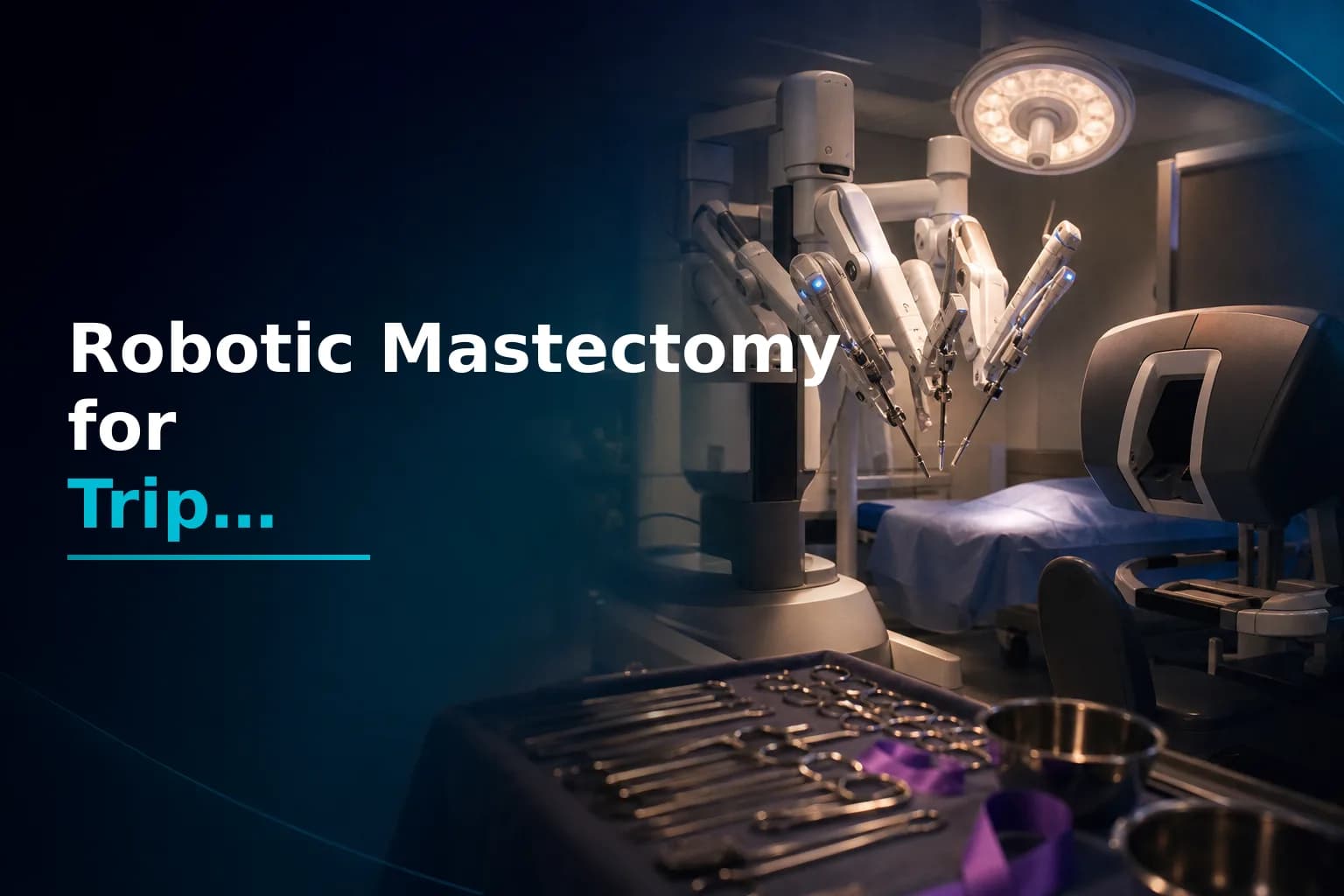
Robotic mastectomy removes breast tissue through very small cuts - usually near the armpit or in a skin fold, not across the breast. The surgeon sits at a console near the operating table and uses hand controls that guide robotic instruments inside your body. A high-definition three-dimensional camera gives the surgical team a magnified view of the tissue during the procedure.
For TNBC patients who need mastectomy, robotic techniques make nipple-sparing and skin-sparing mastectomy easier in the right patients. These approaches preserve your nipple and areola or your breast skin, which changes how you look and feel after surgery - and makes reconstruction easier.
A 2023 meta-analysis of seven studies covering 1,674 patients with general breast cancer compared robotic nipple-sparing mastectomy with standard nipple-sparing mastectomy. The robotic approach had fewer overall complications, including less skin necrosis, less blood loss, and fewer serious problems needing more treatment. [PMC, 2023] However, robotic surgery takes longer and costs more than standard surgery - both important when planning your care.
This evidence covers all breast cancer patients, not just TNBC. The same surgical principles - complete tissue removal with clear margins and preserved skin - apply to all cancer types. But your surgeon's assessment of your anatomy and tumor will guide the final decision.
Robotic mastectomy is not right for every TNBC patient. You might be a candidate if your tumor responded well to neoadjuvant chemotherapy, your tumor doesn't involve your nipple or skin, and your breast anatomy allows robotic access. Standard surgery might be better if you have inflammatory breast cancer, cancer in your nipple, very advanced spread, or prior chest surgery. Your surgeon's honest assessment matters more than which technology they prefer.
How Does Robotic Mastectomy Compare: UK Private vs India?
| Factor | UK Private Care | Specialist Care in India |
|---|---|---|
| Surgery cost (GBP) | Varies based on surgeon, hospital, and reconstruction plan - get a full written quote from your UK provider before comparing | Generally lower than comparable UK private fees; varies by hospital and procedure - get a written quote from your chosen center |
| Time from referral to surgery | Several weeks to months depending on private pathway and completion of neoadjuvant chemotherapy | Typically 1-3 weeks after finishing pre-surgery assessment and neoadjuvant treatment |
| Robotic platform availability | Selected private hospitals only; not available across the UK | Robotic breast surgery programs at major cancer centers in Mumbai, Delhi, Chennai, Bengaluru, and Hyderabad |
| Female surgeons and coordinators | Available at some UK centers; ask specifically when booking | Female breast surgeons and female international patient coordinators available at leading accredited centers |
| Post-surgery follow-up | Managed entirely by your UK team | Full operative notes and pathology records provided; additional chemotherapy and radiation continue with your UK team |
UK private costs vary based on surgeon fees, hospital, anesthetic, and reconstruction - always get a full written quote before comparing. India's major cancer centers have international patient programs for robotic breast surgery, with English-speaking surgeons and staff used to supporting international patients. Many UK women find the total cost of surgery in India - including travel and recovery stay - is lower than UK private surgery alone. But the most important thing is always the quality of surgery and aftercare.
How Splitting Your Care Between India and the UK Works in Practice
Most UK women who have robotic mastectomy in India don't move their whole treatment there. The typical plan is: chemotherapy in the UK, surgery in India, then return to the UK for additional chemotherapy, radiation, and follow-up.
To make this work safely, you and both teams need to communicate clearly and share all records. Your Indian surgical team will give you everything you need - operative notes, pathology results from removed tissue, imaging from your stay, and a recovery plan - so your UK oncologist can start additional treatment right away.
Timing matters in this model. Research from 2025 shows that waiting more than four weeks after finishing chemotherapy can hurt your outcomes. Delays in starting radiation after surgery also lead to more cancer coming back locally. [PMC, 2025] A good surgical team will plan your surgery to happen within the recommended timeframe.
Read our practical guide on splitting breast cancer care between surgery in India and additional treatment in the UK for a step-by-step explanation of how coordination works and what to ask both teams before you travel.
Questions to Ask Before Agreeing to a Surgical Plan
Before you decide on surgery in the UK or abroad, ask your surgeon these questions:
- Based on my tumor location and how I responded to chemotherapy, am I a candidate for nipple-sparing or skin-sparing mastectomy?
- Is robotic mastectomy available at your center, and what is your team's experience with this technique in patients who have had neoadjuvant chemotherapy?
- If I choose to have surgery abroad, what records will you provide so that my UK oncologist can continue additional treatment?
- How will additional chemotherapy and radiation be sequenced after surgery, and what timing is recommended for my case?
- What reconstruction approach - implant-based or using my own tissue - fits my priorities, and can reconstruction begin at the time of mastectomy?
If your team hasn't fully addressed these questions, getting a second opinion is reasonable and common. If you're comparing UK options to international care, the Art of Healing Cancer team can review your pathology and imaging quickly and discreetly. This won't change your current care. You can consult the Art of Healing Cancer team before committing to a UK surgical plan.
Supporting Yourself During the TNBC Treatment Period
The weeks between TNBC diagnosis and surgery are very demanding. Chemotherapy, scans, consultations, and treatment planning all happen at once. Sleep problems and anxiety during this time are common and need attention. Macmillan Cancer Support offers specific guidance for people with TNBC, covering medical and emotional aspects. For natural help with sleep and stress, you can also look at Ayurnomics's Sleep and Stress range - Ayurvedic options to use alongside your medical care, not instead of it.
When to Talk to Your Doctor
Talk to your doctor about robotic surgery and overseas care at any of these times:
- At your first surgery consultation after getting your TNBC diagnosis
- After finishing neoadjuvant chemotherapy, when your surgery plan is usually finalized
- If you feel that less-invasive surgery options have not been fully discussed with you
- If you are comparing the timing or cost of UK private care to traveling for specialist surgery
For a confidential, private consultation with female coordinators available, reach the BreastCancer.One team at breastcancer.one/#contact.
This article is for general information and is not a substitute for medical advice. Always consult your oncologist or care team about your specific situation.