
After a breast cancer diagnosis, you will face important decisions about surgery. Most women have more options than they realize. Your surgeon will guide you, but understanding your choices helps you ask better questions and pick what works for you.
This guide covers three types of breast cancer surgery: lumpectomy, traditional mastectomy, and robotic-assisted mastectomy. It explains what each one involves, who qualifies for it, and when robotic surgery might be an option - including at specialist centers if that affects your choices.
What usually happens after a breast cancer diagnosis?
According to NHS England faster diagnostic pathway guidance, patients should receive a diagnosis and agree on a treatment plan within 28 days of being referred by their GP. Getting from diagnosis to surgery involves multiple steps.
Your care team will review your tumor type, size, grade, and hormone receptor status. They will recommend either breast-conserving surgery or mastectomy, plus any other treatments like chemotherapy or radiotherapy. You will likely have a breast MRI or CT scan and blood tests to confirm staging. This guide explains your pathology report in plain language.
What are the main surgical options for breast cancer?
There are three main surgical options. Which one is right for you depends on your tumor size and location, your overall health, and what matters most to you.
Breast-conserving surgery (lumpectomy)
Lumpectomy removes the tumor and a border of healthy tissue, keeping most of the breast. It is usually followed by radiotherapy to reduce the risk of the cancer returning. For many women with early-stage breast cancer, survival after lumpectomy plus radiotherapy is similar to survival after mastectomy. You may qualify for lumpectomy if your tumor is small compared to your breast size, is in one spot, and you can have radiotherapy.
Traditional mastectomy
A mastectomy removes all breast tissue on the affected side. There are different types: skin-sparing (keeps most skin for reconstruction), nipple-sparing (keeps skin, nipple, and areola), and standard (removes tissue, nipple, areola, and some skin). Mastectomy is recommended when the cancer is large, when there are multiple cancers in the same breast, or when you prefer it. Women with a high genetic risk - like those with a BRCA1 or BRCA2 gene change - may also choose preventive mastectomy on the other breast.
Robotic-assisted mastectomy
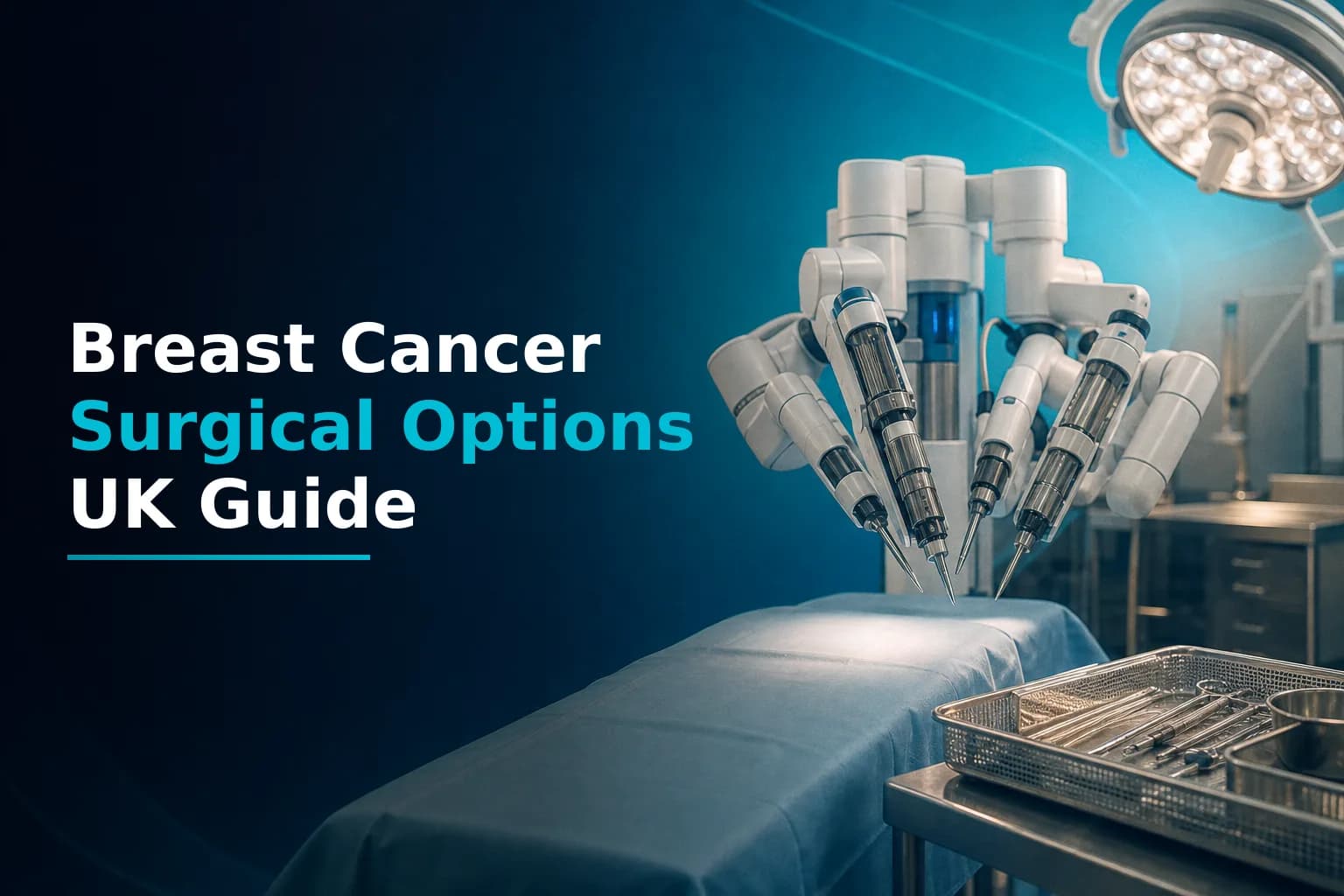
Robotic breast surgery uses a machine operated by the surgeon from a console to do mastectomy with smaller cuts than regular surgery. The surgeon controls robotic arms with small instruments and a 3D high-definition camera. Research in 2025 compared robotic to open surgery for early-stage breast cancer and found both safe and effective. See the review on PubMed. Another study looked at robotic versus regular nipple-sparing mastectomy and found similar complication rates, with some reports of less blood loss and better views of the nipple blood supply with robotic surgery. See that study on PMC.
The main difference is scar placement. In regular mastectomy, the cut goes across your chest. In robotic surgery, it goes in your armpit or another hidden spot, leaving your chest mostly unmarked. This is called the hidden-scar technique. Learn what robotic surgery can and cannot do.
How do lumpectomy, mastectomy, and robotic mastectomy compare?
The table below shows the main differences that matter most when choosing surgery. This is a starting point, not a personal recommendation - your surgeon will tell you which options work for your situation.
| Factor | Lumpectomy (Breast-Conserving) | Traditional Mastectomy | Robotic-Assisted Mastectomy |
|---|---|---|---|
| What is removed | Tumor plus a margin of healthy tissue; breast largely preserved | All breast tissue; skin may be kept (skin-sparing) or removed | All breast tissue via small incisions; skin-sparing or nipple-sparing variants available |
| Typical hospital stay | Often day surgery or 1 overnight stay | 1 to 3 nights; longer when reconstruction is performed at the same time | Around 1 day at specialist centers for mastectomy alone |
| Main scar location | Small scar on the breast near the tumor site | Horizontal scar across the chest wall | Small incision in the armpit or breast fold; chest wall largely unmarked |
| Radiotherapy usually needed | Yes, typically required after surgery | Not always; depends on tumor size and lymph node involvement | Same oncologic decisions apply as for conventional mastectomy |
| Immediate reconstruction possible | Sometimes, through oncoplastic techniques | Yes, when eligible; using implant or patient's own tissue | Yes; commonly performed at the same time, with well-preserved skin to work with |
Sources: Cancer Research UK - types of breast cancer surgery; meta-analysis on robotic vs conventional nipple-sparing mastectomy (PMC). Robotic hospital stay reference: PRoMiSing I pilot study (PMC). Figures are indicative and vary by centre and individual circumstances.
Robotic mastectomy is not a separate type of surgery - it's a way to do mastectomy with smaller cuts. If your surgeon recommended mastectomy, the choice between robotic and regular is about how it's done, not whether you need it. The goal - removing the cancer completely and safely - is the same either way.
When does robotic surgery make sense for breast cancer?
Consider robotic surgery if you qualify for mastectomy and care about scar placement and less visible scarring. The robotic approach may also give better views of the blood supply to the nipple during nipple-sparing surgery - which matters if you want to keep your nipple and areola.
It's not right for everyone. Women with very large breasts, tumors close to the skin surface, or those who can't have certain reconstruction methods may not qualify for robotic techniques. Availability is also an issue. Robotic breast surgery is not yet common in the NHS. In UK private care, only a few specialist centers with trained robotic surgeons offer it. Robotic surgery does well when it comes to hiding scars, handling tissue carefully, and seeing into tight spaces. But it can't change whether you need radiotherapy or other treatments based on your cancer type.
Is robotic breast surgery available in the UK?
Robotic mastectomy is not yet routine in the NHS. A few NHS and private centers offer it, but access depends on where you live and which hospital you use. In UK private care, costs are high and only a few surgeons with robotic training offer the procedure. Some UK women looking at mastectomy are also considering specialist centers in India, where robotic breast surgery programs are well established and wait times are shorter. The Art of Healing Cancer team offers confidential case reviews to help you decide if a robotic approach suits your situation.
Should you get a second opinion on your surgical plan?
A second opinion before breast cancer surgery is a standard step. Most breast surgeons expect and respect it. Recommendations can vary between surgeons and centers, especially when it's unclear whether you can have breast-conserving surgery or keep your nipple during mastectomy. A second opinion from a robotic breast surgery specialist can reveal options not mentioned at your first visit. Some women told mastectomy is their only choice find that nipple-sparing or skin-sparing surgery is possible. Others told breast conservation won't work learn that chemotherapy before surgery can change that. This guide explains how to get a second opinion without disrupting your NHS care.
What else affects which surgery you can have?
Several things beyond tumor size affect which surgery you can have.
- Tumor biology. Hormone receptor status, HER2 status, and tumor grade determine whether you'll get chemotherapy before surgery, which can affect whether breast conservation is possible.
- BRCA gene status. If you carry a BRCA1 or BRCA2 variant, your doctor may recommend preventive mastectomy on the unaffected breast along with treating your cancer.
- Prior radiotherapy. If you've had radiation to your chest before, you likely can't have breast-conserving surgery followed by more radiation.
- Breast size and tumor position. These affect how you'll look after lumpectomy and whether robotic surgery is technically possible.
- Your priorities. Some women want to reduce the risk of cancer coming back. Others want to keep breast tissue, hide scars, or recover faster. All of these are important, and your surgeon should listen to them.
No surgery is best in all situations. The right choice is one that treats your cancer safely and matches what matters to you - like how you'll look, how long recovery takes, or your reconstruction goals. You can contact BreastCancer.One to explore your options and learn if robotic surgery is right for you.
When to talk to your doctor
Talk to your surgeon or breast care nurse if you're not sure which surgery was recommended and why, if you want to know if nipple-sparing or skin-sparing mastectomy is an option for you, if you're thinking about robotic surgery, or if you're considering a second opinion. You don't need to rush - taking time to ask more questions is normal and OK.
This article is for general information and is not a substitute for medical advice. Always consult your oncologist or care team about your specific situation.