
A Diagnosis That Changes Everything
Hearing the words "breast cancer" is difficult at any age. For women in their 60s and 70s, the news can bring worry. You may be thinking about your health, your independence, and how treatment will fit around the rest of your life.
Treatment outcomes for breast cancer in older women have improved over the past decade. Surgery is often very safe in this age group. Newer surgical techniques, including robotic-assisted approaches, may require less recovery time than many women expect.
This article explains what robotic breast cancer surgery involves, why older women might consider it, and why some UK patients are choosing specialist robotic surgery in India.
Breast Cancer in Your 60s and 70s: What the Statistics Show
Breast cancer is more common in older women than many people realize. According to Cancer Research UK, invasive breast cancer peaks in women aged 60 to 69, accounting for about 26% of all breast cancer diagnoses in the UK.
Breast Cancer Now reports that about 55,000 women are diagnosed with breast cancer in the UK every year. Roughly 80% are aged 50 or older.
If you are in your 60s or 70s and recently diagnosed, you are not alone. Many women in your situation ask the same questions: What surgery is right for me? Will I manage recovery? Are there options beyond what I have been offered? The answer is often yes - and this article helps you understand what those options look like.
What Is Robotic Breast Cancer Surgery?
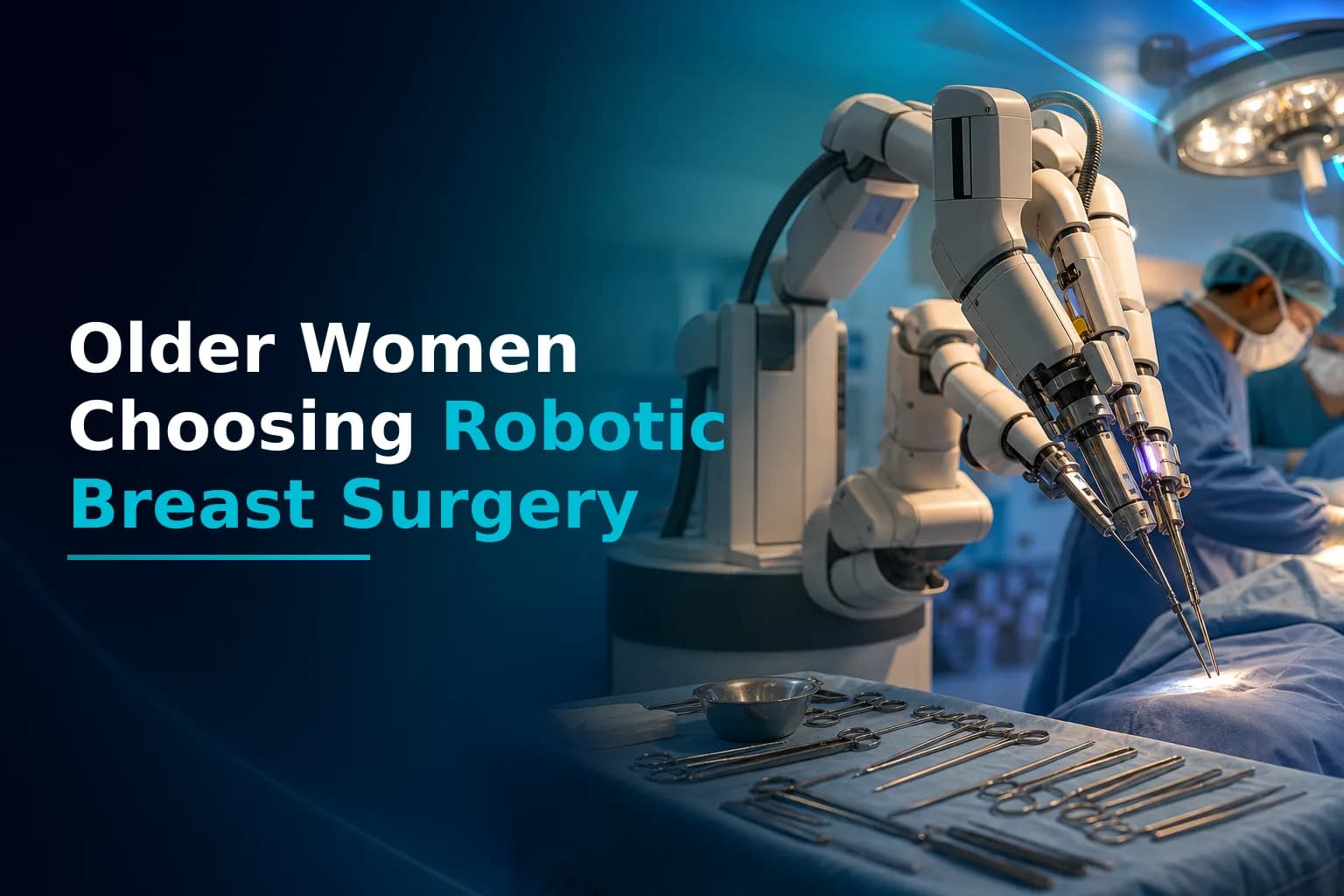
The term "robotic surgery" can sound alarming if you have not heard of it before. It does not mean a robot performs your operation alone. It means your surgeon controls small mechanical arms from a nearby console, guiding precision instruments through very small incisions.
The robotic system gives the surgeon a magnified, three-dimensional view of the area being operated on. This is far more detailed than what the surgeon sees in open surgery. The system also filters out small hand movements, making the instruments steadier and more precise.
In breast cancer surgery, robotic platforms can be used for nipple-sparing mastectomy, skin-sparing mastectomy, and some forms of breast-conserving surgery such as lumpectomy. The instruments often enter through small incisions in less visible areas - for example, the armpit or side of the chest - rather than directly on the breast.
A clinical review published in PubMed Central on robot-assisted minimally invasive breast surgery found that robotic techniques may offer cancer control comparable to open surgery, with improved cosmetic results and smaller, less visible scars.
Why Robotic Surgery May Be Particularly Relevant for Women in Their 60s and 70s
Many older women worry about recovery before surgery. Open breast cancer surgery involves larger incisions and longer healing. For women with other health conditions or who want to return to everyday life quickly, this matters.
A review published in PubMed Central on enhanced recovery after surgery in older women found that minimally invasive techniques are linked with less blood loss, shorter hospital stays, and faster return to normal activity compared to open surgery.
These advantages matter for older patients. Less physical disruption during surgery means less stress on the body during recovery. It also means a shorter time away from home - important for women managing ongoing health conditions or with care responsibilities.
Robotic surgery may also reduce visible scarring. For women who value preserving their body's appearance after treatment, this matters regardless of age. Body image and quality of life after surgery remain significant concerns for many older women.
It is important to note: robotic surgery is not suitable for every patient. Whether you are a good candidate depends on the size and location of the tumor, the type of cancer, your anatomy, and your overall health. Your surgical team will assess you fully before recommending any approach.
Robotic Surgery vs Traditional Open Surgery: Key Differences
The following comparison is based on clinical evidence and is a general guide. Individual outcomes vary depending on the patient, surgeon, and specific procedure.
- Incision size: Robotic surgery uses small incisions, often placed in less visible locations such as the armpit. Open surgery typically involves a larger incision on the breast.
- Surgical view: Robotic systems provide a magnified, three-dimensional image. Open surgery relies on direct eyesight with standard lighting.
- Scarring: Smaller, better-placed incisions in robotic surgery tend to produce less visible scarring and better cosmetic results in suitable patients.
- Hospital stay: Many minimally invasive procedures may be associated with shorter hospital admissions, though this depends on the specific operation and the individual patient.
- Recovery time: Minimally invasive approaches may allow faster return to daily activities for some patients, though all surgery requires rest and follow-up care.
- Cancer control: Published studies suggest that robotic techniques achieve margins and cancer control comparable to open surgery in carefully selected patients.
- UK availability: Robotic breast surgery is not yet available across all NHS hospitals. Access depends on your region and the procedure recommended for your case.
For a full comparison of robotic breast surgery access within the NHS, through private providers, and internationally, see our guide on Robotic Breast Cancer Surgery on the NHS vs Private in the UK: Why Some Patients Are Choosing International Care.
Mastectomy or Breast Conservation? What the Evidence Suggests for Older Women
Many women in their 60s and 70s are told that mastectomy is the only option. This recommendation is sometimes correct. But many older women with early-stage invasive breast cancer can safely have breast-conserving surgery.
A population-based study published in PubMed Central examining survival outcomes after breast cancer surgery in older women with early invasive breast cancer in England found that breast-conserving surgery produces outcomes comparable to mastectomy in suitable patients.
A separate review in PubMed Central examining outcomes after mastectomy and lumpectomy in elderly patients with early-stage breast cancer found that when patients were matched for disease characteristics, the two approaches showed broadly comparable overall survival. The authors concluded that both options deserve full discussion with older patients.
Ask your team directly whether breast-conserving surgery has been considered for your case and why they recommend what they do. If you feel your options have not been fully explored, a second opinion from another breast cancer specialist is reasonable and accepted.
If you have been told mastectomy is your only option and want to know whether conservation is possible, our article I Was Told Mastectomy Was My Only Option: A UK Patient's Guide to Robotic Lumpectomy and Getting a Second Opinion in India explores this in detail.
Why Some UK Women in Their 60s and 70s Are Looking Abroad for Treatment
The NHS provides high-quality breast cancer care. However, access to specific surgical techniques - such as robotic nipple-sparing mastectomy or robotic lumpectomy - varies considerably between hospitals. Not every hospital has the equipment, trained surgeons, or enough patients to support these procedures routinely.
Waiting times also matter. Breast Cancer Now has highlighted that the 62-day standard from urgent referral to first treatment has not been consistently met for breast cancer patients in England, and thousands have waited longer than the target. For women who feel the pressure of time after diagnosis, waiting is stressful.
Some reasons UK women in their 60s and 70s explore treatment abroad include:
- Wanting access to a surgeon with high-volume experience in robotic breast cancer surgery.
- Preferring a shorter, more predictable pathway from diagnosis to surgery.
- Seeking a facility where robotic techniques are standard, not occasional.
- Wanting a more detailed and personalized treatment plan.
- Cost - private robotic breast surgery in the UK can be expensive, and some patients find comparable specialist care is available internationally at lower cost.
Exploring options abroad does not mean leaving UK care behind. Many women who have surgery in India continue post-operative care, hormone therapy, or radiotherapy with their NHS team at home. The two pathways can work together when care teams communicate well.
Why India Is Gaining the Attention of UK Breast Cancer Patients
India has developed a strong reputation in oncology over the past two decades. Several major Indian hospital networks have invested in robotic surgical systems, specialist breast cancer units, and international patient programs to support overseas patients from initial contact through follow-up care after they return home.
For UK women considering this route, the following factors matter:
- Specialist expertise: A number of Indian hospitals have breast surgeons with extensive training and experience in robotic techniques, including nipple-sparing mastectomy and breast-conserving robotic lumpectomy.
- English-speaking care teams: Most large cancer hospitals in India have bilingual clinical and administrative teams, and international patient coordinators who communicate in English throughout the process.
- Advanced technology: Several Indian hospitals operate robotic surgical platforms - including the da Vinci system - that are also used in leading centers in Europe and North America.
- Comprehensive care pathways: Hospitals serving international patients typically coordinate pre-operative assessment, surgery, in-hospital recovery, and a handover plan for continuing care back in the UK.
- Cost: Treatment costs in India are often considerably lower than private surgery costs in the UK for comparable procedures. Prices vary by hospital and operation type, and you should always request a personalized written quote before deciding anything.
As with any healthcare decision, careful research is essential. Look for hospitals with recognized international accreditations such as Joint Commission International (JCI) certification. Verify your surgeon's specific experience with robotic breast procedures. A good provider will welcome your questions before you commit.
For a step-by-step overview of what the process involves from a UK patient's perspective, see From Diagnosis to Surgery: A UK Breast Cancer Patient's Real-World Guide to Accessing Robotic Treatment in India.
What the Journey Looks Like: From First Enquiry to Returning Home
If you are thinking about accessing robotic breast surgery in India, here is a general outline of what the process typically involves. Steps and timelines will vary depending on the hospital and your individual case.
- Step 1 - Initial online consultation: You share your medical reports with an international patient team. A surgeon reviews your case and provides a preliminary assessment of whether you are likely to be a suitable candidate for robotic surgery.
- Step 2 - Medical record review: The team will typically request your mammogram report, biopsy results, histopathology report, and any available imaging such as MRI or PET-CT scans. The more detail you can share at this stage, the more accurate the initial assessment will be.
- Step 3 - Treatment planning: Once your case has been reviewed, you receive a written treatment plan covering the recommended procedure, expected duration of stay, recovery timeline, and a cost estimate.
- Step 4 - Travel coordination: Most international patient teams assist with visa documentation, accommodation near the hospital, and airport transfers. Many also help arrange travel for a family member or friend going with you.
- Step 5 - Surgery and in-hospital recovery: After arrival, you complete any final pre-operative tests and have your surgery. The hospital stay for robotic breast procedures typically ranges from a few days to about a week, depending on the type of operation.
- Step 6 - Discharge and UK follow-up: Before you fly home, you receive a full discharge summary, histopathology results, and a follow-up care plan. Your international care team can liaise with your NHS GP or oncologist to support continuity of care back in the UK.
A Note From a Specialist Perspective
Age alone should not limit a woman's surgical options. Many women in their 60s and 70s are in good health and can benefit from advanced minimally invasive breast cancer surgery. What determines candidacy is proper pre-operative assessment - evaluating fitness, anatomy, and disease characteristics - not a number. The goal of any surgical approach is to achieve the best cancer control and quality of life. Women in this age group deserve to discuss all options in full with a surgeon who has genuine, demonstrable experience in the techniques being discussed.
When to Talk to Your Doctor
If you have been recently diagnosed with invasive breast cancer and are in your 60s or 70s, ask your care team specific questions. Ask whether breast-conserving surgery has been evaluated for your case. Ask whether a robotic approach is available or available on referral. If you feel the conversation has not covered all your options, you can always seek a second opinion from another breast cancer specialist.
This article is for general information and is not a substitute for medical advice. Always consult your oncologist or care team about your specific situation.