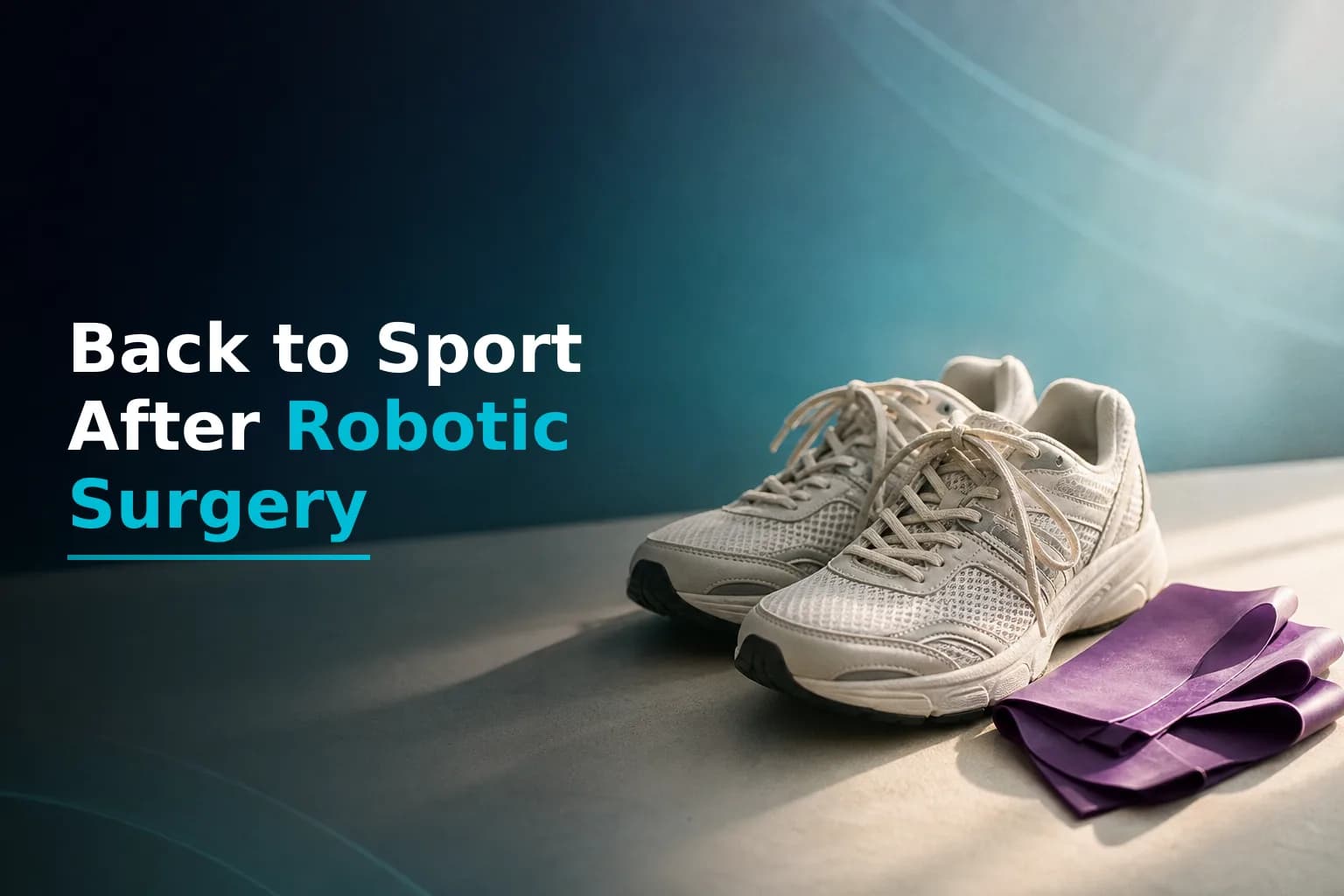
If you're active, one of your first questions after breast cancer diagnosis is usually: when can I get back to sport? After robotic breast cancer surgery, the answer is sooner than you might think, but you'll need to take it slowly and work with your doctors. Here's what to expect, week by week and month by month, from your first gentle walks to getting back to running, swimming, or other intense activities.
Your return to exercise: a phase-by-phase overview
Everyone heals at their own pace. Your timeline depends on the type of surgery, whether you had reconstruction, and how you're doing. That said, most women who have had robotic breast cancer surgery follow roughly these six stages:
- Weeks 1 to 2: Rest, short gentle walks, and prescribed arm exercises only.
- Weeks 3 to 4: Gradually increase walking distance; begin physiotherapy shoulder exercises.
- Weeks 5 to 8: Gentle movement such as yoga or Pilates; no swimming until wounds are fully closed.
- Months 2 to 3: Swimming, light cycling, and low-impact activity with surgeon clearance.
- Months 3 to 6: Gradual return to moderate-intensity exercise such as jogging or aqua aerobics.
- Month 6 and beyond: High-impact sport, resistance training, and contact activities with doctor approval, especially if you had reconstruction.
What happens to your body after robotic breast cancer surgery?
Robotic breast surgery uses small cuts and a camera-guided tool to remove tissue. Your skin heals faster than with open surgery. But deeper healing - in muscle, the lymph system, and nerve endings - follows the same steps as traditional surgery.
Three things shape your return to sport more than anything else.
First, your chest and shoulder muscles need time to heal. Raising your arm or putting weight through your shoulder too early can hurt the healing tissue.
Second, if lymph nodes were removed from your armpit during a biopsy, your lymph system has been disrupted. This raises your risk of lymphedema - swelling from a buildup of lymph fluid - if you do too much too soon.
Third, nerves in your breast and chest may feel numb, tingly, or sore for weeks or months. Bouncing or high-impact activities that put pressure on your chest can make this worse early on.
Why reconstruction changes your timeline
If you had a mastectomy without reconstruction, you'll likely recover faster than women who had an implant or tissue flap added at the same time. A 2023 study found that women who had a simple mastectomy got back to exercise in one to two months, compared to three to four months for those with reconstruction.
If you had a tissue flap - like a DIEP flap using tissue from your belly - you have two spots healing. High-impact exercise that bounces or puts pressure on your belly will be off limits for several months after a flap. Your surgical team will give you a timeline based on how you're healing. If you're deciding between reconstruction options and how they affect when you can go back to sport, the article on implant vs autologous reconstruction after robotic mastectomy covers these differences.
Phase 1 - weeks one and two: rest and gentle movement
In the first two weeks, rest comes first. Short, gentle walks are good for blood flow and help prevent blood clots. But anything that makes your heart race or puts stress on your chest or shoulder should wait.
Your nurse or physiotherapist will usually give you shoulder and arm exercises to start within the first day or two. These aren't sports training. They're gentle moves to stop stiffness and prevent cording - tightening under your arm. Breast Cancer Now says not to raise your arms above shoulder height in week one.
Don't carry bags, lift heavy things, or do movements that pull on your chest. You'll probably have surgical drains in place for part of this time. You can't exercise while drains are in.
Phase 2 - weeks three to six: regaining range of motion
By weeks three and four, most women are walking farther and handling daily tasks better. Focus on the physiotherapy exercises your team gave you - usually starting with simple arm lifts and moving to more shoulder rotations.
Light yoga or Pilates might be okay starting around week four or five, but ask your surgeon or physiotherapist first about any new activity. Skip poses that put weight on your arms, like downward dog, until you get the go-ahead.
Don't swim yet - your wounds need to be fully healed before you go in a pool to lower infection risk. Ask your doctor to check your wound before you book a swim. For specific exercises at each stage, the article on physiotherapy and exercises after robotic breast surgery shows you what to do.
Phase 3 - months two and three: swimming, cycling, and low-impact activity
Once your wounds are fully healed - usually by weeks four to eight - you can start swimming. Breast Cancer Now says that physical activity, including swimming, helps women recover well after breast cancer treatment. Breaststroke might feel better than front crawl at first because it doesn't twist your chest and shoulder as much.
Flat cycling, low-impact aerobics, and brisk walking are also good at this stage for most women. The key is to go slow: do more time before you do more intensity, and stop if your arm, hand, or breast starts to swell.
Now is when to watch for lymphedema. Quick jumps in upper-body exercise can sometimes cause swelling. If your arm, wrist, or chest gets puffy and stays puffy, call your doctor right away. Read the article on lymphedema risk after robotic breast surgery: prevention and early treatment for more about what to watch for and how to treat it.
As you get more active, you can ask your doctor about anything that might help your recovery. This might include supplements or other support they recommend.
Phase 4 - months three to six: returning to running and moderate training
By month three, many women are ready to try jogging or short runs. Cancer Research UK says to increase activity slowly and stop if you feel pain or swelling. Walk-run intervals - mixing walking and jogging - are better than running straight through at first.
A good sports bra is key before you start running. If you had reconstruction, your doctor might recommend a certain style that protects your implant or flap. Bad support can cause pain or stress the healing tissue.
Hill cycling, aqua aerobics, gym classes, and dance usually feel okay by months four to five for women who had a simple mastectomy or lumpectomy. If you had flap reconstruction, ask your surgeon before using rowing machines or rough trails, because the core work can stress the flap site early on.
Phase 5 - month six and beyond: high-impact sport and resistance training
Month six is usually when high-impact sports, resistance training, and contact sports are okay for women who had reconstruction. If you had a lumpectomy or simple mastectomy without reconstruction, you might get back to running, HIIT classes, tennis, or netball sooner - often by months four or five - with your doctor's okay.
Regular exercise helps breast cancer survivors in the long run. The National Institutes of Health recommends that cancer survivors do 150 minutes of moderate aerobic activity or 75 minutes of intense activity per week, plus two sessions of resistance exercise each week. Build up to these goals slowly and talk with your team about what's right for you.
If you're a competitive athlete or want to get back to a certain sport, ask your doctor or physiotherapist for a plan just for you. Contact sports like rugby or martial arts risk arm injury that could cause lymphedema even years later. This doesn't mean you can never do them, but you should get advice from someone who knows your situation.
Signs you may be pushing too hard
Pay attention to your body at every phase. Stop exercise and call your doctor if you notice:
- Swelling in the arm, hand, chest, or breast area that does not reduce after rest.
- Increasing pain or tightness around the wound site or armpit.
- Any discharge or reopening of a wound.
- Numbness or pins and needles that worsen during or after exercise.
- Extreme tiredness that doesn't get better with sleep.
These symptoms might not be serious, but talk to your nurse or doctor before you start exercising again.
How your surgical choice can shape your recovery
Robotic breast surgery uses smaller cuts and causes less damage to your skin, which usually means less pain after surgery and a faster return to gentle daily tasks compared to open surgery. Deeper healing, lymph node recovery, and reconstruction timelines are similar whether the surgery is robotic or open, but the first weeks usually feel easier with the robotic approach.
Choose a surgical approach that fits your tumor, body, and lifestyle. Think it through before you decide. If you're not sure the recommendation accounts for your active lifestyle, you can ask the Art of Healing Cancer team about robotic breast-conservation options before you finalize your plan. Getting more input now costs nothing and can help a lot.
When to talk to your doctor
Talk to your doctor before you start any new exercise, before you get back to sport after a break, or any time you notice swelling, more pain, or other symptoms during exercise. If you're thinking about traveling for surgery and want a recovery plan that fits your active lifestyle, tell your surgical team about your activity goals at your first visit.
This article is for general information and is not a substitute for medical advice. Always consult your oncologist or care team about your specific situation.